
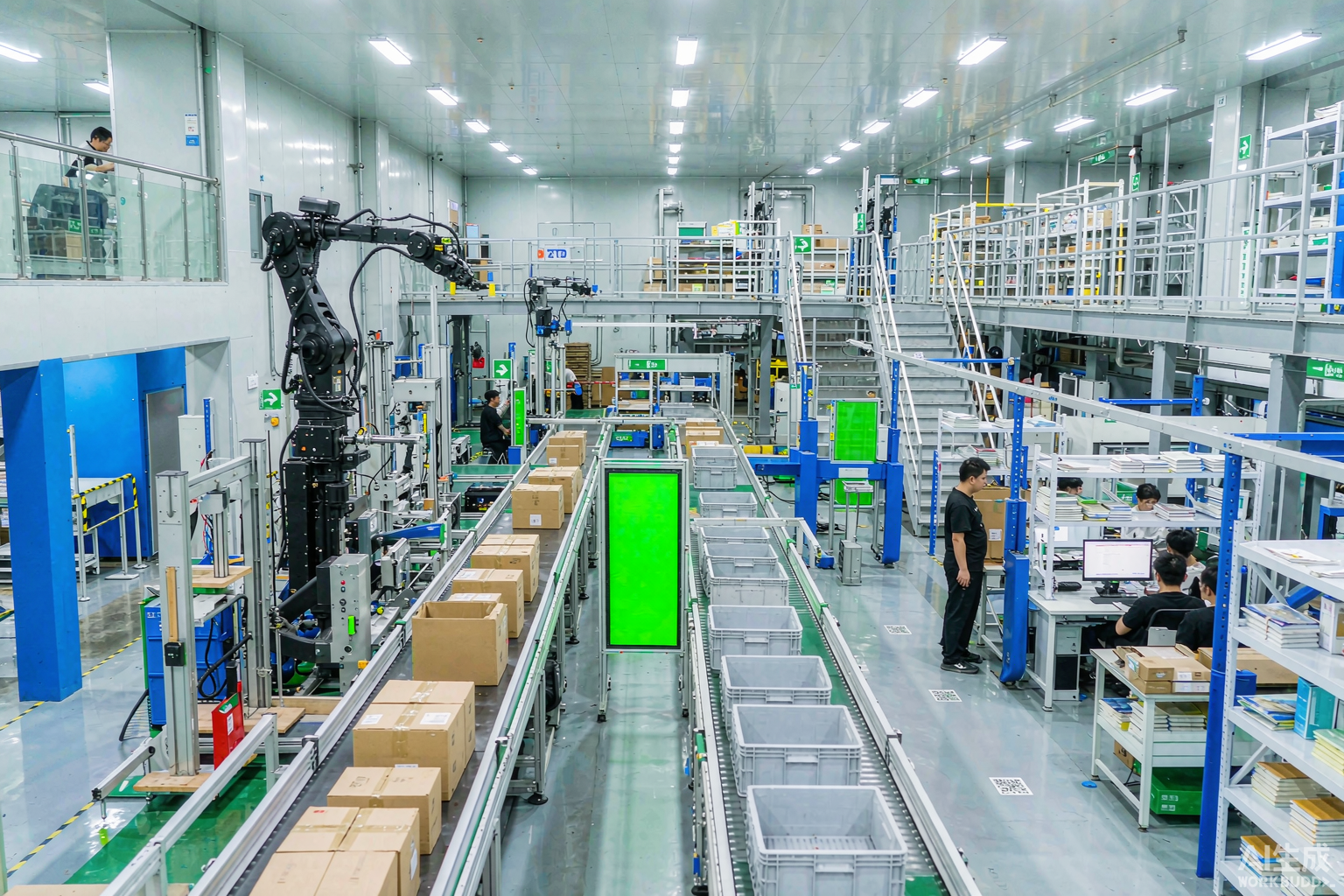
Third-party logistics (3PL) is a different beast from a single-client warehouse. One 3PL facility may handle fast-moving e-commerce parcels for one client, bulky retail cartons for another, and seasonal promotional surges for a third — all under one roof, with shared labor and shared equipment.
That variety is exactly what makes equipment selection hard. This industry guide explains how 3PL warehouse conveyor and sorting systems should be chosen for multi-client operations, and which Guosheng equipment fits each requirement.
Why 3PL Warehouses Need Different Equipment
Three characteristics separate 3PL operations from in-house fulfillment:
- Multiple clients, multiple profiles — item sizes, weights, and packaging vary from client to client
- Volume volatility — client demand swings with seasons, promotions, and contract wins or losses
- Shared infrastructure — equipment must serve many workflows without being rebuilt for each client
The equipment implication is clear: prioritize flexibility, modularity, and scalability over single-purpose optimization.
Sortation for Mixed Client Volumes
Sortation is where 3PL flexibility matters most. Guosheng’s sorting range includes several models whose product applications explicitly include 3PL logistics warehouses, so you can match the sorter to each client’s parcel profile rather than forcing one machine to do everything:
- Cross-belt sorters — up to 10,000 parcels/hour for high-volume clients with lightweight parcels
- Modular belt sorters — medium-to-large volumes with scalable line design for growing client accounts
- Turntable wheel sorters — multi-direction routing for complex, space-constrained layouts
- Swing arm sorters — heavier parcels up to 60 kg, common in industrial and 3PL environments
For a full lineup overview, see the automated sorting system product line, and for cost planning the automated sorting system cost guide.
Conveyor Transport That Adapts to Each Client
Between receiving, storage, picking, and dispatch, 3PL facilities need transport that handles all their clients’ goods. A mix of conveyor types gives operators the flexibility to route different products:
- Belt conveyors for smooth, controlled transport of parcels, cartons, and totes
- Roller conveyors for flat-bottomed cartons and totes, powered or gravity-fed
- Telescopic conveyors at the docks to handle inbound and outbound trailers for every client
Vertical Movement Across Mezzanines and Levels
Many 3PL sites use mezzanine storage to maximize cube. Reliable vertical transport keeps all levels productive:
- Continuous vertical conveyors for steady flow of cartons and totes between floors
- Spiral chain conveyors for continuous up-and-down movement in a compact footprint
- Chutes for simple, gravity-fed drops from the sorter deck or mezzanine
Designing a 3PL Conveyor System That Scales
Because client volumes change, build in flexibility from the start:
- Choose modular equipment — modular belt sorters and sectional conveyors can be extended as accounts grow
- Plan shared backbone capacity — size main transport lines for the combined peak of your largest concurrent clients
- Keep reconfiguration simple — standard interfaces let you add lanes, diverters, or takeaway conveyors without a full redesign
- Track by client — plan scanning and WMS/WCS integration so sortation data can be attributed to the right account
For a structured way to gather your requirements, use our warehouse conveyor system design checklist.
Conclusion
3PL warehouses win contracts by absorbing complexity — many clients, variable volumes, changing profiles. The right conveyor and sorting equipment turns that complexity into an advantage: modular systems that can be reconfigured, extended, and re-purposed as your client mix evolves. Guosheng supplies sorters and conveyors whose applications include 3PL logistics warehouses, and can design a flexible layout around your multi-client operation.
Running a 3PL operation? Contact Guosheng with your client mix, parcel profiles, and peak volumes — our engineers will propose a modular conveyor and sorting system that scales with your contracts.
Frequently Asked Questions
Q: What conveyor equipment is best for a 3PL warehouse?
A: 3PL operations benefit from modular, flexible equipment: cross-belt, modular belt, turntable, and swing arm sorters (which list 3PL warehouses as an application), plus a mix of belt and roller conveyors for transport and telescopic conveyors at the docks.
Q: How do 3PL warehouses handle multiple clients with different parcel profiles?
A: By using modular equipment and multiple sorter types rather than one fixed machine. Modular belt sorters scale with volume, swing arm sorters handle heavy items, and standard conveyor interfaces let you reconfigure lanes as client requirements change.
Q: How should a 3PL size its conveyor capacity?
A: Size the shared backbone for the combined peak of your largest concurrent clients, not the average across all accounts. Because volumes change with contracts and seasons, choose modular systems that can be extended without a full redesign.