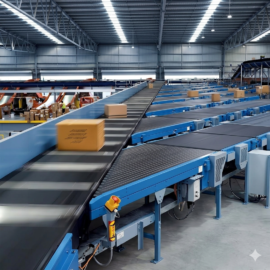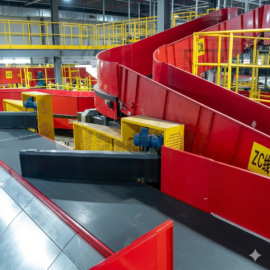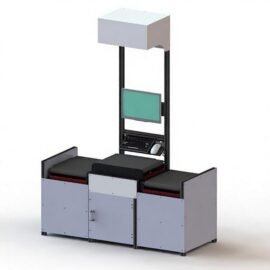
Automated sorting systems for parcel and warehouse logistics
Automated sorting systems help e-commerce, parcel and warehouse operations route items to the right destination with a layout matched to the real parcel mix. Start with item dimensions and weights, destination count, peak flow, induction method and available footprint; the right sorter is selected as part of the complete line, not in isolation.
How to select an automated sorter
Parcel profile: define the smallest and largest items, weight range and packaging condition.
Sortation objective: confirm destination count, required accuracy and peak operating periods.
Line integration: map induction, takeaway conveyors, chute positions and controls interfaces.
Site constraints: share the available floor plan, access points and expansion requirements.
Compare sorter configurations
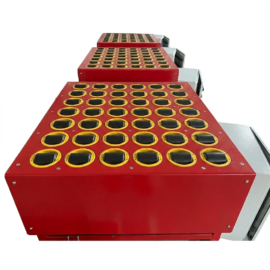
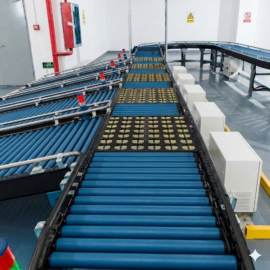
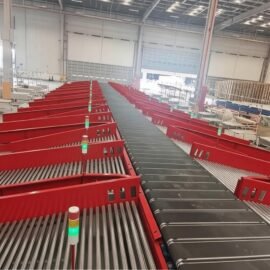
Review the Cross-Belt Sorter, Narrow Belt Sorter, Modular Belt Sorter and O-Belt Wheel Sorter to compare the available mechanisms before requesting a layout review.
Frequently asked questions
What should an automated sorter RFQ include?
Provide parcel dimensions and weights, throughput target, destination count, operating hours, line drawing, available footprint and any required control-system interfaces.
How do I choose between sorter mechanisms?
The best option depends on the parcel mix, destination layout, induction and discharge arrangement, and the level of flexibility required for the project. A line review turns those inputs into a practical configuration.
Match the sorter mechanism to the parcel flow
Compare the handling method before selecting an automated sorting system. A line review should use the actual parcel dimensions, packaging condition, number of destinations, peak flow and available space. The equipment below represents different routing approaches; the right choice depends on the proposed infeed, discharge and control layout.
Sorter typeHandling approachCheck in a project review
Cross-belt sorterIndividual carrier belts discharge items to assigned destinationsInduction, package tracking, destination count and takeaway capacity
Modular belt sorterMulti-lane belt configuration with gravity or powered discharge layoutsLane arrangement, parcel range and space for expansion
Swing arm sorterAn arm diverts parcels from the main pathParcel profile, divert timing and downstream collection
Wheel sorterWheel-based routing into selected lanesPackage base, transfer angle and lane configuration
For a focused belt architecture comparison, read modular belt sorter vs cross-belt sorter. To prepare an RFQ, share your parcel mix, target flow, destination plan, line drawing and software interfaces with GSSort.
Showing all 8 results