
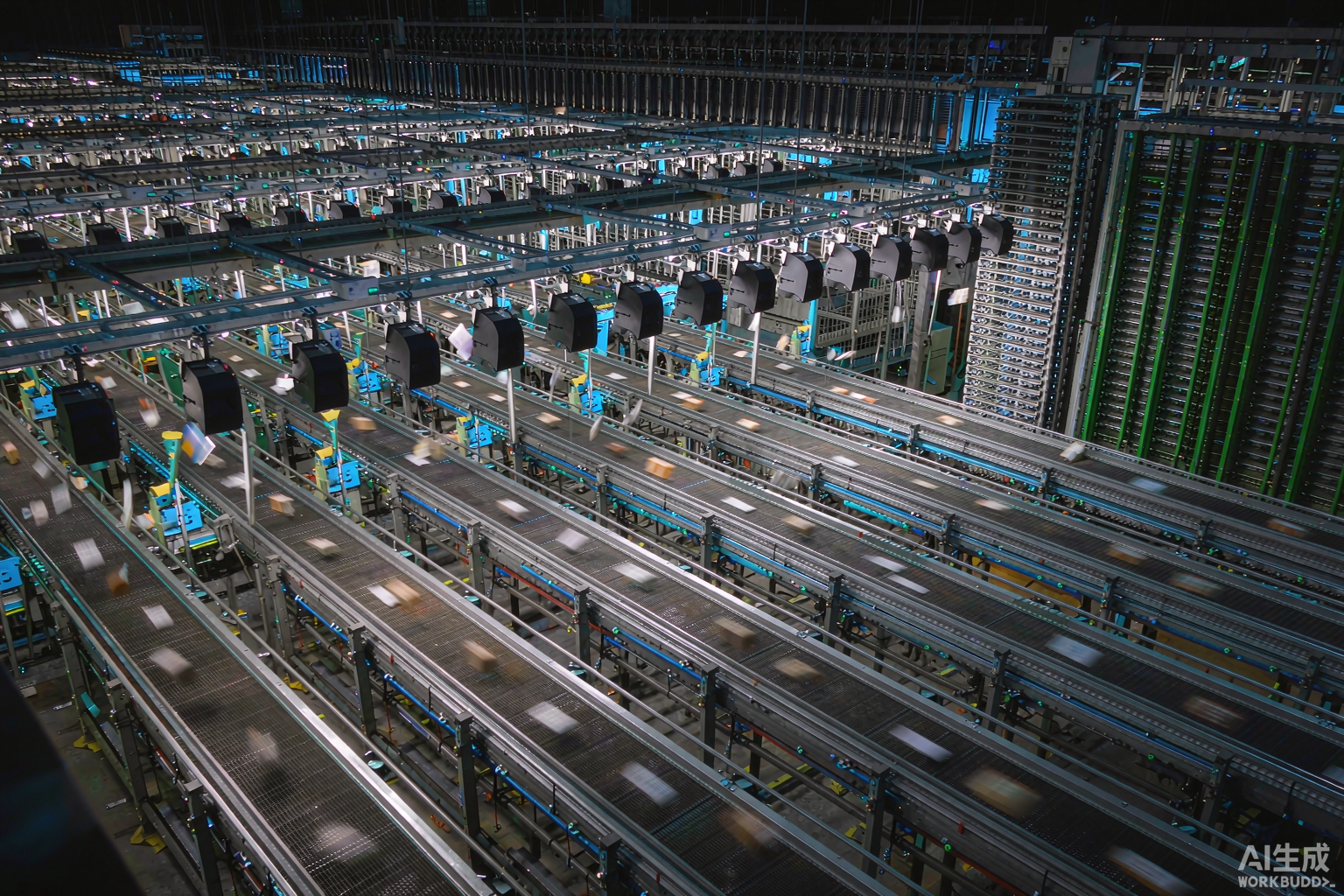
A courier or postal sorting hub is a throughput machine. Thousands of small parcels and letters arrive in waves, must be sorted to the correct regional or last-mile lane within a tight window, and dispatched before the next wave lands. One misplaced package or one jammed line ripples straight through to the delivery promise.
This industry guide looks at how courier, express, and postal hubs should choose sortation and conveyor equipment, using Guosheng’s product range as the reference — with each sorter’s fit drawn from its published applications.
What Makes Courier and Postal Hubs Different
- Very high throughput — hubs move parcels in tens of thousands per shift
- Peak surges — daily cut-off windows and seasonal spikes concentrate the load
- Mostly small, light items — mailers, letters, and small parcels dominate
- Accuracy is critical — a mis-sorted parcel becomes a delivery failure downstream
- Last-mile routing — output lanes map directly to delivery routes and regional hubs
Sorter Types for Parcel Sorting Hubs
Guosheng’s sorter lineup includes several models whose published applications explicitly cover postal and express operations:
- Cross-belt sorter — up to 10,000 parcels/hour; listed for airport and postal sorting centers, ideal for high-volume lightweight parcels
- Narrow belt sorter — listed for postal sorting centers and parcel distribution hubs, with a compact footprint for high-density lines
- Pivoting wheel sorter — listed for express and postal sorting lines and parcel distribution hubs, handling smooth transfers with low product damage
- O-belt wheel sorter — listed for parcel distribution hubs and last-mile delivery hubs, with low-noise multi-angle diverting
- Faster sorter — listed for parcel sorting hubs, built for continuous high-speed operation
For a side-by-side comparison of the two most common technologies, read our cross-belt sorter vs wheel sorter guide.
Induction and Infeed Conveyors
Accurate induction keeps a hub’s sorter fed at its rated rate. Before parcels reach the sorter, they travel on conveyor lines that must handle mixed mailers and cartons without jamming.
- Narrow belt merging conveyors combine multiple infeed lines into one sorter feed, improving efficiency
- Belt conveyors move parcels and mailers smoothly to the sorting deck
- Curve and spiral belt sections route infeed lines through tight hub layouts
Dispatch, Chutes, and Last-Mile Loading
At the output end, sorted parcels drop to dispatch lanes and carrier bays. This stage decides whether trucks leave on schedule.
- Chutes provide gravity-fed drops from the sorter deck to dispatch cages and bags
- Telescopic conveyors — listed for courier and express parcel hubs — extend into trucks for fast loading and unloading
- Roller conveyors transport crates and totes through the dispatch area
Designing for Peak Windows
- Size for peak hour, not average — sorting capacity must cover your busiest cut-off window
- Buffer before the sorter — accumulation ahead of induction smooths incoming waves
- Plan lane flexibility — last-mile routes change; lanes should be reconfigurable
- Minimize damage on small items — gentle diverting protects high-value and fragile mailers
Use our warehouse conveyor system design checklist to gather the inputs, and the automated sorting system cost guide for budget planning.
Conclusion
Courier and postal hubs live or die by throughput and accuracy within tight dispatch windows. Matching the right sorter type — cross-belt, narrow-belt, or wheel — to your parcel profile and volume, and supporting it with efficient infeed and dispatch conveyors, keeps every wave moving and every route loaded on time. Guosheng supplies sortation and conveyor equipment whose applications include postal sorting centers, express lines, and parcel distribution hubs.
Upgrading a sorting hub? Contact Guosheng with your parcel profile, peak volume, and lane layout — our engineers will recommend the sortation equipment for your express and postal operation.
Frequently Asked Questions
Q: What sorters are used in postal and courier sorting hubs?
A: Cross-belt sorters (up to 10,000 parcels/hour) suit high-volume lightweight mail; narrow belt sorters fit compact postal lines; pivoting wheel sorters serve express and postal sorting lines; and O-belt wheel sorters cover parcel distribution and last-mile hubs.
Q: How do sorting hubs handle peak volumes?
A: By sizing sortation capacity for the busiest cut-off window rather than the daily average, adding accumulation buffers before induction, and keeping dispatch lanes reconfigurable as last-mile routes change.
Q: How are parcels moved from the sorter to dispatch trucks?
A: Sorted parcels drop via chutes to dispatch cages and bags, then move on roller conveyors through the dispatch area. Telescopic conveyors extend into trucks for fast loading — a common setup in courier and express hubs.