
Cold chain logistics is material handling with an extra constraint: the equipment must survive cold, humid, and sometimes washdown environments while keeping temperature-sensitive goods moving without delay. A conveyor that corrodes, jams, or cannot be cleaned becomes a liability in a facility where every minute in the wrong temperature zone matters.
This industry guide explains what to look for in cold chain conveyor systems and how Guosheng equipment — from FRP chutes to hygienic belt conveyors and sorters — fits each stage of a temperature-controlled warehouse.
What Makes Cold Chain Equipment Different
Warehouse automation is rarely built for freezing temperatures, high humidity, condensation, and aggressive cleaning chemicals. Cold chain and pharmaceutical operations need handling equipment with three extra qualities:
- Corrosion resistance — components must not rust or degrade in cold, humid air
- Cleanable surfaces — easy sanitation to meet food and pharmaceutical standards
- Reliability at low temperature — drives and moving parts must perform consistently in the cold
Material Selection Is the First Decision
The single most important choice in cold chain automation is material. For gravity-fed vertical and transfer movement, FRP (fiberglass-reinforced plastic) is a standout option: its corrosion resistance and cleanable surfaces make it a natural fit for cold-chain and pharmaceutical logistics, as well as food-grade operations.
For a full breakdown of material trade-offs, see our guide on FRP chute vs steel chute. In humid or chemically active cold environments, FRP typically outperforms bare carbon steel, while stainless steel suits the most hygiene-critical washdown areas.
Stage 1: Vertical Flow in Cold Storage
Cold rooms and freezer levels are often stacked, so goods move vertically between temperature zones. Gentle, corrosion-resistant vertical handling is essential.
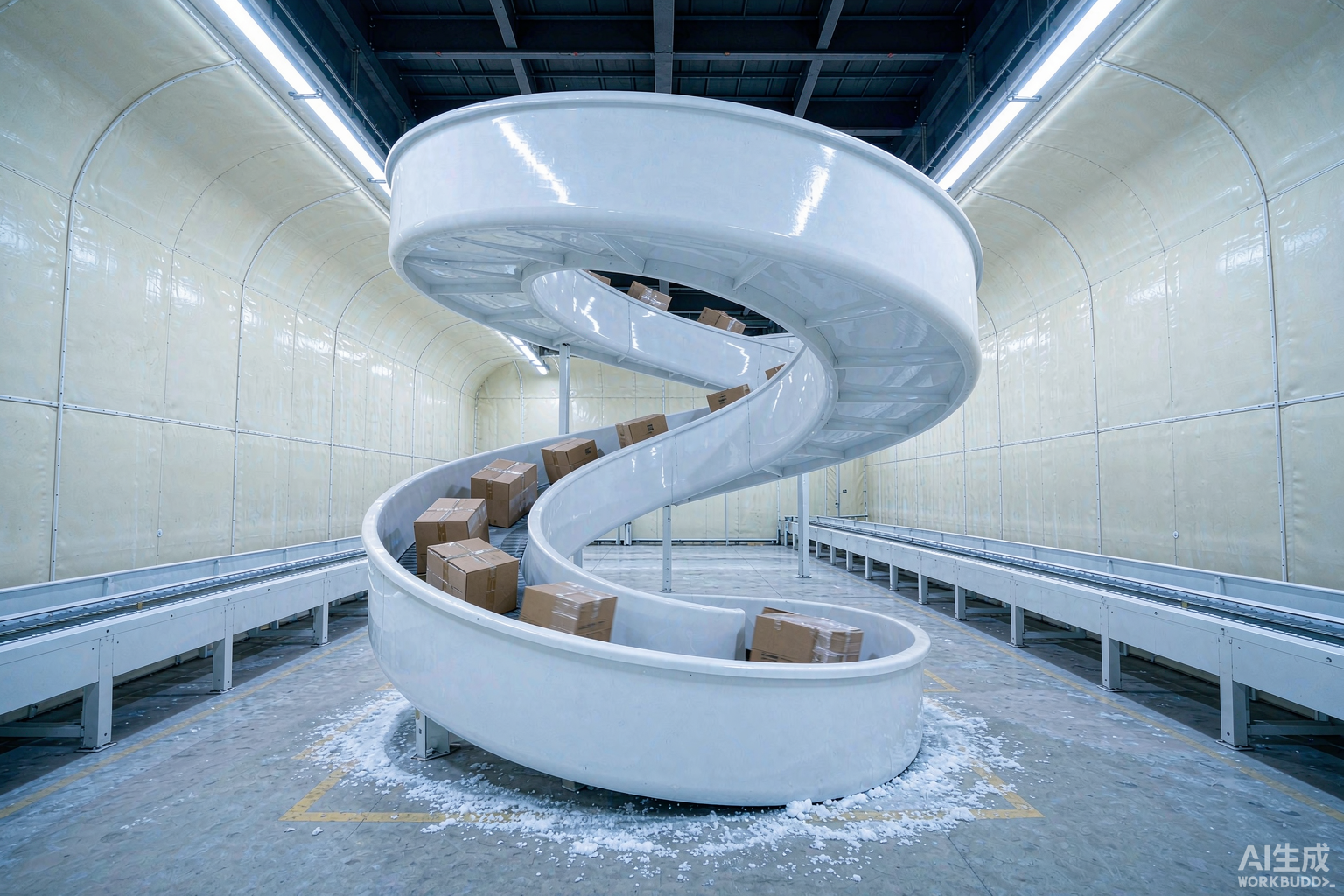
- The FRP Spiral Chute moves cartons and parcels down between levels with a smooth, corrosion-resistant, cleanable surface — suited to cold-chain, pharmaceutical, and fulfillment operations.
- For powered up-and-down flow in a compact footprint, vertical conveyors with stainless steel options maintain continuous flow between floors.
For a deeper comparison of gravity versus powered vertical movement, read our spiral chute vs vertical conveyor guide.
Stage 2: Hygienic Transport on the Line
On the main handling lines, conveyors must transport cartons and totes smoothly while surviving routine sanitation.
- Spiral curve belt conveyors provide smooth, hygienic transport between production and process stages and support food and beverage applications, including rinsing environments.
- Roller conveyors with stainless steel rollers and frames are an option where washdown is frequent.
- Frame material choices (stainless steel options across the belt conveyor line) let you match the equipment to your sanitation protocol.
Stage 3: Sorting Orders and Batches in the Cold
Distribution from cold chain facilities still needs order and batch sortation — often for store replenishment, meal-kit assembly, or pharmaceutical dispensing.
- Guosheng automated sorters support cold chain and pharmaceutical distribution as listed applications, routing cartons and totes to the right lane or dispatch point.
- Choose sorter type by parcel weight and throughput: see the automated sorting system product line and our cost guide for planning.
Planning Checklist for Cold Chain Automation
- Confirm the operating temperature range and whether washdown cleaning is used.
- Choose FRP or stainless steel where corrosion resistance and cleanable surfaces are required.
- Map vertical flow between temperature zones and size the chute or lift accordingly.
- Size sortation capacity for the busiest cold-storage dispatch window.
- Confirm drive and component specifications for reliable low-temperature operation with our engineers.
Conclusion
Cold chain logistics demands more from its handling equipment: corrosion resistance, cleanable surfaces, and dependable low-temperature operation. By choosing FRP chutes, hygienic belt and roller conveyors, and appropriately specified sorters, cold storage operators keep temperature-sensitive goods flowing without sacrificing equipment lifespan. Guosheng supplies these options across its product line and can confirm material and component choices for your specific cold environment.
Automating a cold chain facility? Contact Guosheng with your temperature range, sanitation protocol, and flow profile — our engineers will recommend the corrosion-resistant conveyor and handling configuration for your operation.
Frequently Asked Questions
Q: What conveyor equipment works in cold storage?
A: Cold storage and pharmaceutical operations need corrosion-resistant, cleanable equipment. FRP spiral chutes, stainless steel roller and belt conveyors, and appropriately specified sorters are the typical choices — materials that survive cold, humid, and washdown environments.
Q: Why use an FRP chute in cold chain logistics?
A: FRP (fiberglass-reinforced plastic) offers strong corrosion resistance and cleanable surfaces, making it well suited to cold-chain, pharmaceutical, and food-grade environments where metal would rust or degrade. It also provides a smooth surface that handles goods gently.
Q: Can automated sorters operate in cold chain facilities?
A: Yes. Guosheng automated sorters list cold chain and pharmaceutical distribution among their applications. Confirm the operating temperature range and component specifications with our engineering team when configuring a sorter for a cold environment.