
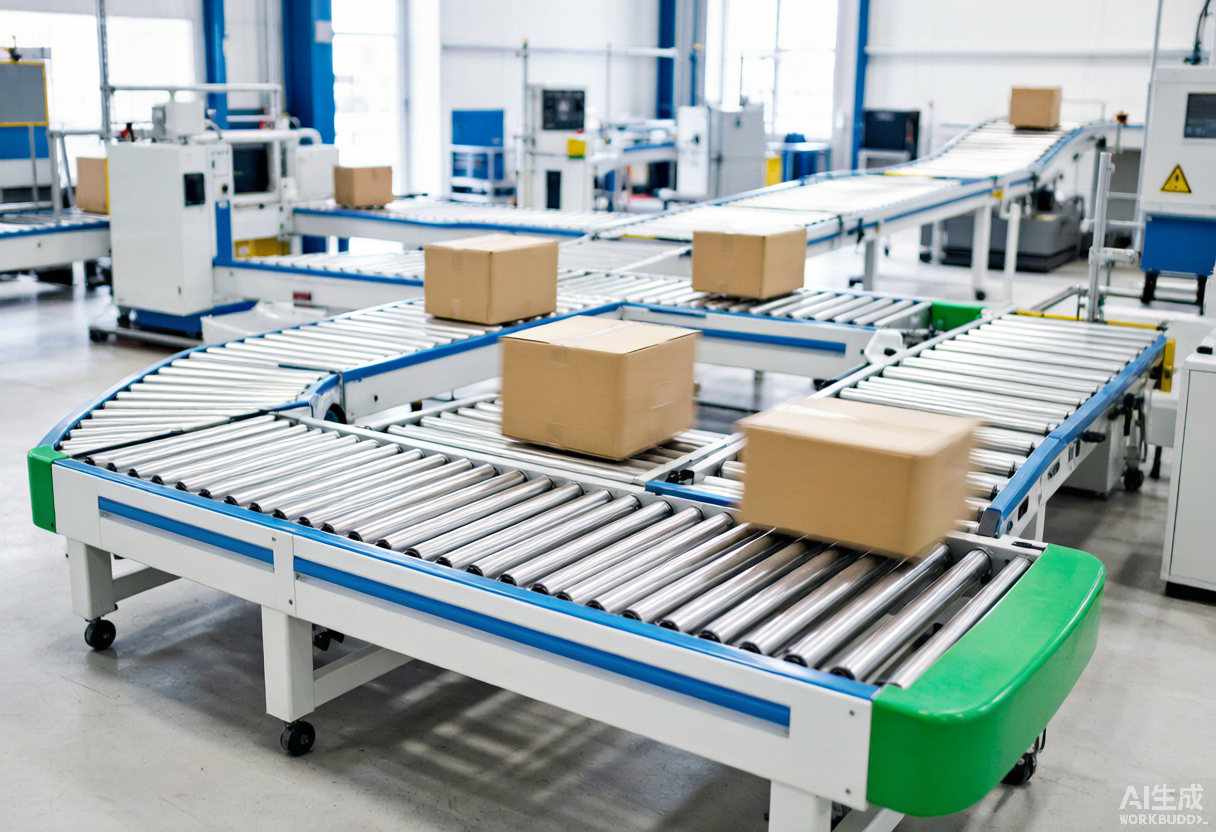
Once you have decided that gravity movement is right for your flow, the next step is designing the conveyor around your items, your slope, and your routing. A gravity roller conveyor design that works on paper can fail on the floor if the item base, slope, or discharge control was never confirmed.
This checklist assumes gravity has already been selected (see gravity vs powered roller conveyor if you are still deciding). It focuses on what to confirm before requesting a layout from engineering.
1. When Gravity Movement Is Appropriate
Gravity roller conveyors work best when items are rigid with stable bases, flow is downhill or manually assisted, and speed control is not critical. Confirm your items meet these conditions before investing in a gravity design — if you need uphill movement or controlled accumulation, a powered roller conveyor may be the better fit.
2. Item Base Condition
- Item bases must be flat and rigid enough to rest across at least three rollers
- Small or flexible items may sag between rollers — confirm roller spacing
- Weight distribution must be stable; top-heavy items may tip on slopes
- Fragile items need gentler slopes or cushioning considerations
3. Slope and Transfer Considerations
- Slope must be steep enough for items to move, but gentle enough to control speed
- Long runs may need intermediate braking or speed-limiting sections
- Confirm the elevation change and available floor length for the incline
- Transfers between sections must align smoothly to avoid jams
4. Straight, Curve, and Spiral Routing
- Straight sections for main flow; curves for direction changes
- For space-saving vertical drops, a spiral gravity roller conveyor moves goods down between levels without power
- Confirm curve radius suits your item length to prevent corner jams
- See the roller conveyor product line for straight, curve, and spiral options
5. Guardrails and Discharge Control
- Side guardrails prevent items from falling off at curves and edges
- End stops or discharge control manage the exit point safely
- Confirm working height suits operators at manual stations
- Check clearance for walkways and access points
Questions for a Layout Enquiry
- What item sizes and weights will move, and what is the largest base dimension?
- What elevation change and floor length are available for the incline?
- Do you need straight, curve, or spiral routing — and what radius fits your items?
- Are guardrails, end stops, or discharge control required at specific points?
- Where are the loading and unloading positions relative to your process flow?
Conclusion
A gravity roller conveyor design succeeds when the item base, slope, routing, and discharge control are confirmed before the layout is drawn. Work through this checklist, include a floor plan, and engineering can deliver a gravity layout that moves your items reliably with zero energy cost.
Ready to request a gravity layout? Contact Guosheng with your item profile and floor plan — our engineers will confirm the design inputs and propose a gravity roller conveyor layout for your facility.
Frequently Asked Questions
Q: What items are suitable for a gravity roller conveyor?
A: Items with flat, rigid bases — cartons, boxes, totes, and stable packages — that can rest across at least three rollers. Small, flexible, or top-heavy items may need powered conveying or special design.
Q: What slope does a gravity roller conveyor need?
A: The required slope depends on item weight, base material, and roller surface. It must be steep enough for movement but gentle enough to control speed — engineering confirms the correct gradient for your specific items.
Q: Can a gravity roller conveyor go around corners or between levels?
A: Yes. Curve sections handle direction changes, and a spiral gravity roller conveyor moves goods down between levels in a compact footprint without power — provided the item base suits roller conveying.