
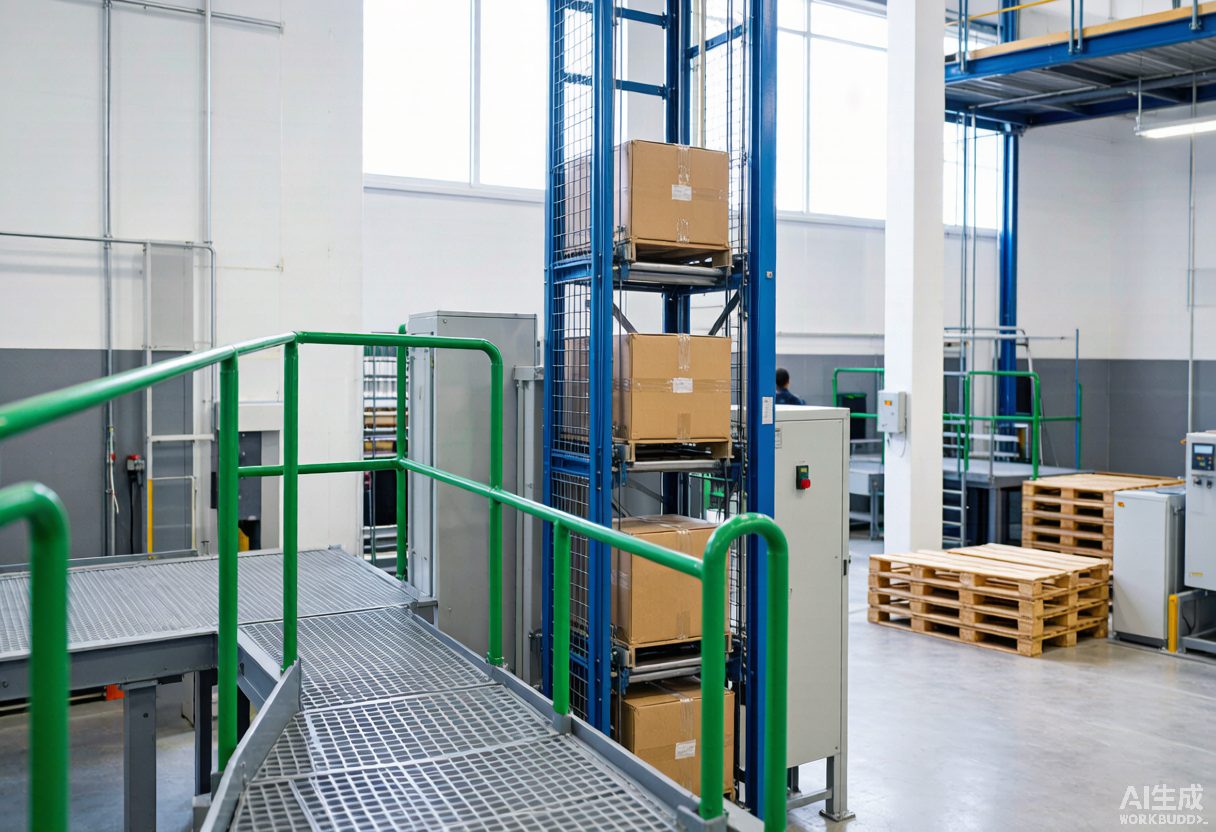
Warehouses rarely stay on one level. Mezzanines, multi-story facilities, and elevated process lines all need a reliable way to move goods between floors — and that is exactly what a vertical conveyor system does. Powered lifts carry cartons, totes, pallets, and parcels up and down automatically, replacing forklift trips and manual handling.
Guosheng manufactures four main types of vertical conveyors. This guide explains each and how to choose the right one for your facility.
Types of Vertical Conveyor Systems
1. Continuous Vertical Conveyor
The Continuous Vertical Conveyor moves cartons, totes, and parcels between floors in a continuous stream, maximizing vertical throughput with minimal gaps. Available in carbon steel or stainless steel frames with adjustable speed — ideal for high-volume logistics centers and e-commerce fulfillment.
2. Vertical Reciprocating Conveyor (VRC)
The Vertical Reciprocating Conveyor uses a reciprocating lifting platform to move cartons, pallets, and totes safely between multiple levels. It is the workhorse of industrial vertical lifting, handling heavy loads with high reliability.
3. Spiral Chain Conveyor System
The Spiral Chain Conveyor conveys cartons and packages continuously up or down while saving valuable floor space — perfect for food production lines and congested facilities.
4. Fork-Type Vertical Lift Conveyor
The Fork-Type Vertical Lift Conveyor uses a fork-style loading structure to transfer pallets and heavy cartons between levels — the solution for automated pallet handling in warehouses and manufacturing.
Vertical Conveyor vs Chute vs Elevator
Vertical conveyors differ from gravity chutes in that they are powered and move goods both up and down, including heavy pallet loads. They differ from freight elevators in being purpose-designed for continuous or automated material flow with conveyor integration — not people or occasional loads. For a detailed comparison with chutes, read our guide on spiral chute vs vertical conveyor.
How to Choose a Vertical Conveyor
- Load type — cartons and totes suit continuous or VRC conveyors; pallets require fork-type lifts or heavy-duty VRCs.
- Throughput — continuous conveyors for high volume; VRCs for batch flow.
- Footprint — spiral chain conveyors save the most space.
- Height and speed — all are customizable; confirm lift height and cycle time with our engineers.
Conclusion
Vertical conveyor systems turn multi-level warehouses into efficient, automated operations — moving cartons, totes, and pallets between floors without forklifts or manual labor. Whether you need continuous high-volume flow, heavy pallet lifting, or space-saving spiral transport, Guosheng has a vertical conveyor engineered for your needs.
Moving goods between floors? Contact Guosheng or explore the full vertical conveyor product range.
Frequently Asked Questions
Q: What is a vertical conveyor system?
A: A vertical conveyor is a powered system that moves cartons, totes, pallets, and parcels between floor levels automatically. Types include continuous vertical conveyors, vertical reciprocating conveyors (VRCs), spiral chain conveyors, and fork-type lifts.
Q: What is the difference between a VRC and a vertical conveyor?
A: A VRC (vertical reciprocating conveyor) uses a reciprocating platform to move loads in batches, handling heavy items like pallets. A continuous vertical conveyor moves items in a continuous stream for higher throughput of lighter goods.
Q: Can vertical conveyors handle pallets?
A: Yes. Guosheng’s fork-type vertical lift conveyor is specifically designed for automated pallet lifting, and VRC models also handle pallet loads. Carton and tote loads are covered by continuous and spiral chain conveyors.