
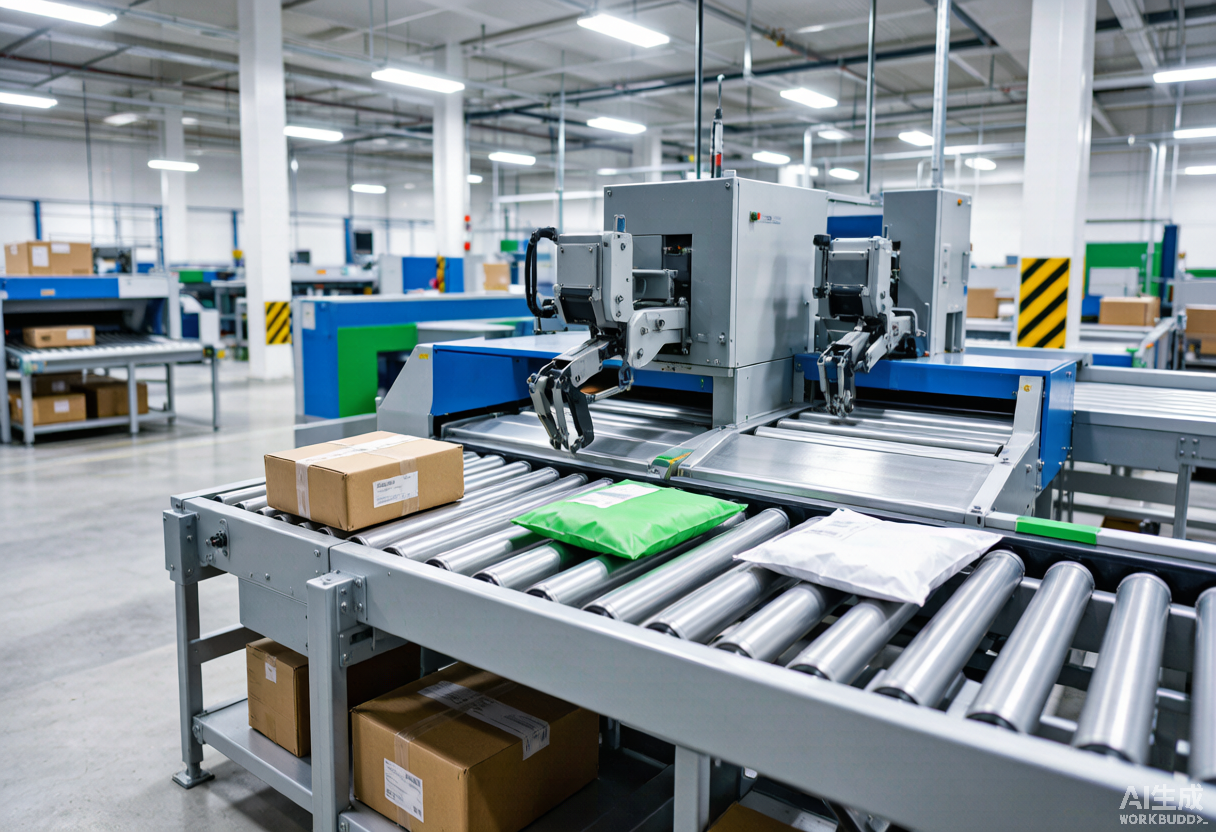
When a distribution center processes tens of thousands of parcels per hour, manual sorting becomes the bottleneck that limits growth. Automated sorting systems eliminate that bottleneck — using mechanical diverters, belt conveyors, and intelligent control software to route each parcel to its correct destination with speed and precision.
At Guangdong Guosheng Intelligent Equipment Co., Ltd., we manufacture eight distinct types of automated sorters, each engineered for specific parcel profiles, throughput requirements, and warehouse layouts. This guide walks through all eight models so you can identify the right sorting technology for your operation.
1. Cross-Belt Sorter — Maximum Throughput for Large Hubs
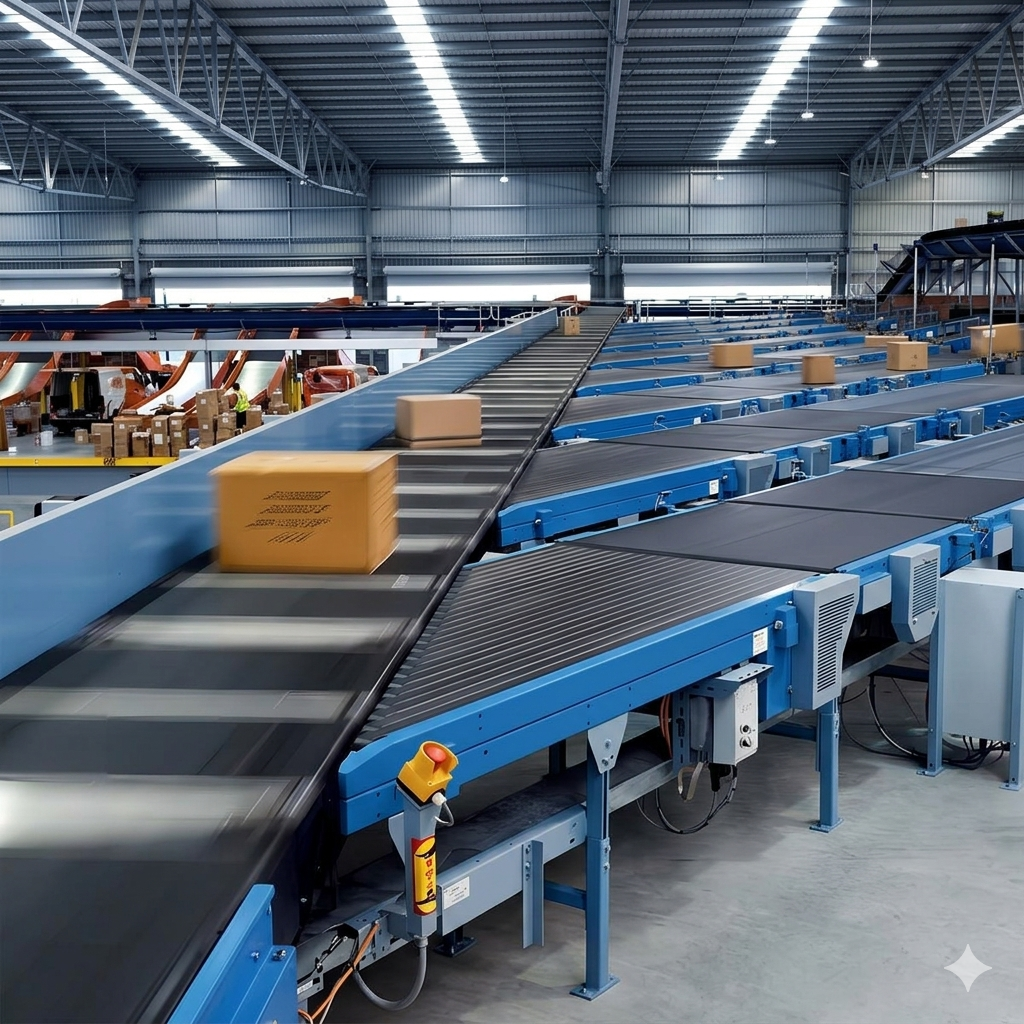
The Cross-Belt Sorter uses individual cross belts mounted on a main conveyor chain to sort parcels, cartons, and lightweight goods to multiple destinations. It is the go-to choice for large-scale operations that need both speed and gentle product handling.
- Capacity: Up to 10,000 parcels per hour
- Sorting method: Cross-belt carrier diverting
- Best for: E-commerce fulfillment centers, parcel distribution hubs, airport and postal sorting centers, 3PL warehouses
- Integration: WMS, WCS, DMS, barcode scanning, RFID tracking
The cross-belt design’s key advantage is its compact footprint relative to conventional sorter layouts. Each carrier belt runs perpendicular to the main conveyor, allowing parcels to be discharged left or right into sorting chutes or takeaway conveyors with minimal gap between items.
2. Faster Sorter — Engineered for Continuous High-Volume Operations
The Faster Sorter is an automated parcel sorting machine built for warehouses and distribution centers that require stable, high-speed handling day in and day out. Its heavy-duty construction ensures reliable performance even under continuous-duty cycles.
- Handling objects: Parcels, cartons, and small packages
- Capacity: High-throughput — thousands of parcels per hour
- Construction: Heavy-duty materials for continuous-duty use
- Best for: E-commerce fulfillment, parcel sorting hubs, 3PL warehouses, industrial logistics, cold chain and pharmaceutical distribution
What distinguishes the Faster Sorter is its adaptability. The modular system design supports flexible conveyor and lane integration, and the configuration can be tailored to specific package sizes, layout constraints, and workflow requirements — making it suitable for both greenfield installations and facility upgrades.
3. Modular Belt Sorter — Scalable Architecture for Growing Operations
The Modular Belt Sorter uses a modular belt architecture that makes it easy to expand sorting capacity as your operation grows. Heavy-duty steel components and modular belt sections allow you to add lanes, extend conveyors, or reconfigure layouts without replacing the entire system.
- System type: Modular belt parcel sorting system
- Lane design: Multi-lane modular belt configuration
- Sorting options: Gravity-fed or powered sorting layouts
- Best for: Medium to large parcel volumes in e-commerce, 3PL, cold chain, and pharmaceutical facilities
The modular approach means lower long-term cost of ownership. You invest in the capacity you need today, then scale up by adding belt modules and diverters as throughput demands increase. The system’s low operating cost and easy routine maintenance make it particularly attractive for operations that plan for multi-year growth.
4. Narrow Belt Sorter — Compact Precision for Mixed Parcel Flows
The Narrow Belt Sorter uses parallel belt modules to move and divert parcels with high accuracy in a compact mechanical footprint. It excels in high-density sorting lines where carton sizes vary and floor space is at a premium.
- Handling objects: Parcels, cartons, mailers, and boxed goods
- Layout: Compact modular conveyor-based design
- Integration: Scanning, PLC, WCS, and WMS ready
- Best for: Postal sorting centers, e-commerce warehouses, parcel distribution hubs, retail cross-docking
For postal operations and e-commerce warehouses that handle a wide range of package sizes — from small mailers to medium cartons — the narrow belt sorter provides the sorting accuracy and stable belt transport needed to maintain throughput without compromising on space efficiency.
5. O-Belt Wheel Sorter — Low-Noise, Multi-Angle Diverting
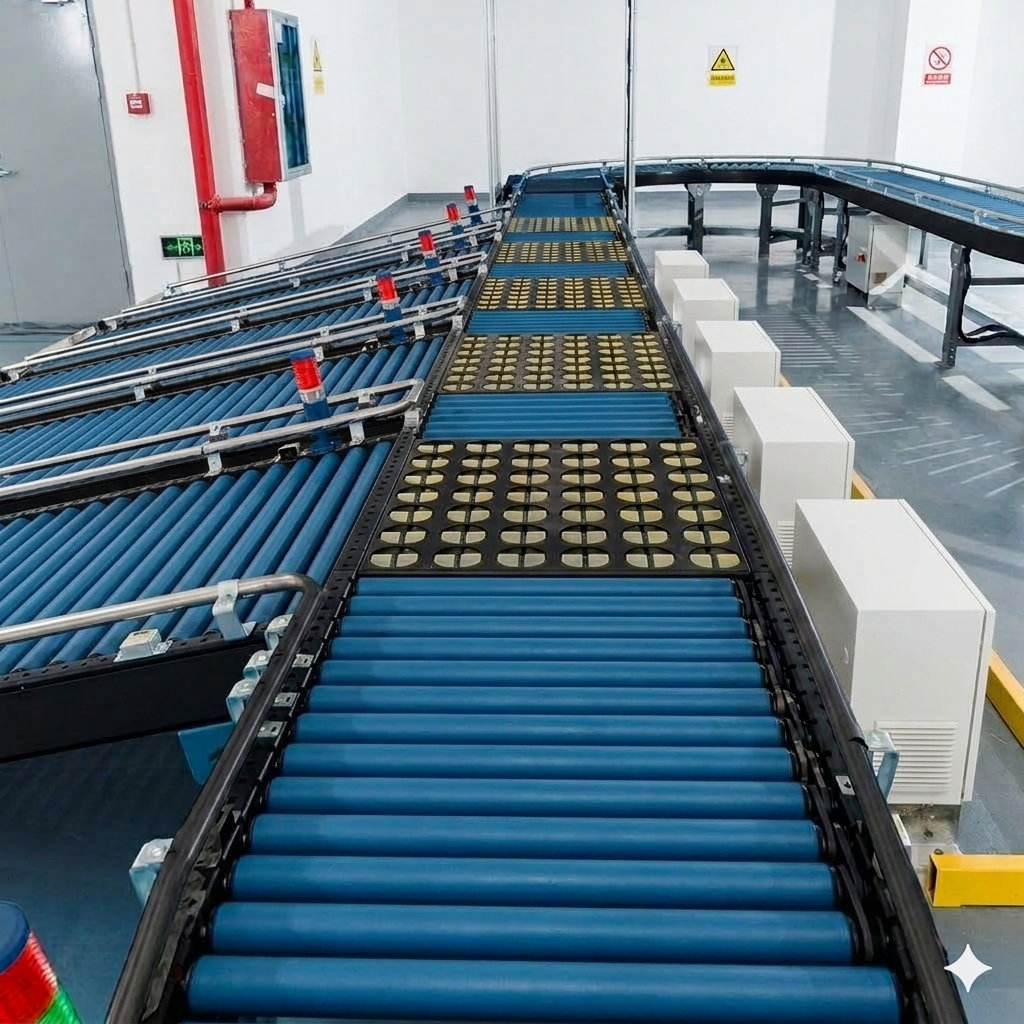
The O-Belt Wheel Sorter uses an O-shaped belt wheel mechanism to divert parcels quickly and accurately at 30, 45, or 60-degree angles. Compared with traditional linear or roller sorters, it delivers high-speed multi-direction sorting while reducing noise and saving space.
- Capacity: 4,000–8,000 parcels per hour
- Package weight: Up to 30 kg per package
- Operating speed: Up to 2.5 m/s
- Divert angles: 30, 45, 60 degrees, or custom
- Best for: E-commerce fulfillment, parcel distribution, last-mile delivery hubs, 3PL warehouses
The O-belt wheel mechanism provides smooth, energy-efficient operation with low noise levels — an important consideration for facilities operating in noise-sensitive environments or with workers stationed nearby. Optional barcode scanning, RFID, and WMS/WCS/DMS integration make it a versatile choice for automated warehouse projects.
6. Pivoting Wheel Sorter (Roller Type) — Smooth Transfers, Low Damage
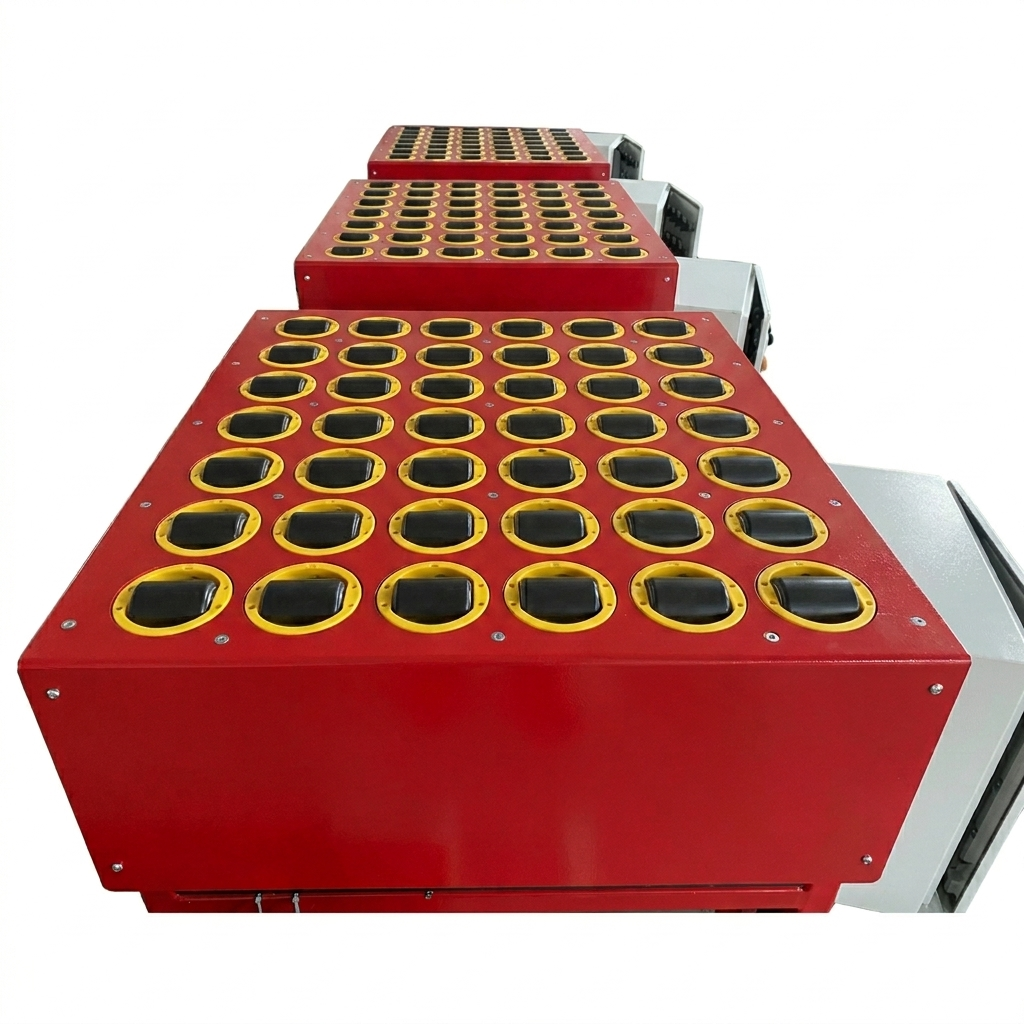
The Pivoting Wheel Sorter uses rotating wheel modules that change direction on demand to divert parcels, cartons, and totes to their assigned destinations. The roller-type design creates smooth transfers with minimal impact on packaged goods — reducing damage rates and maintaining parcel integrity.
- Handling type: Parcels, cartons, totes, and boxed goods
- Sorting direction: Multi-angle diverting based on line design
- System design: Modular, customizable, and conveyor-ready
- Control options: PLC, scanning, WMS/WCS/DMS integration
- Best for: E-commerce fulfillment, express distribution, 3PL warehouses, retrofit conveyor projects
This sorter is particularly well-suited for retrofit projects — its modular structure integrates easily into existing conveyor lines, and the stable, low-maintenance operation makes it a reliable choice for both new sorting lines and facility upgrades.
7. Swing Arm Sorter — Heavy-Duty Multi-Lane Sorting
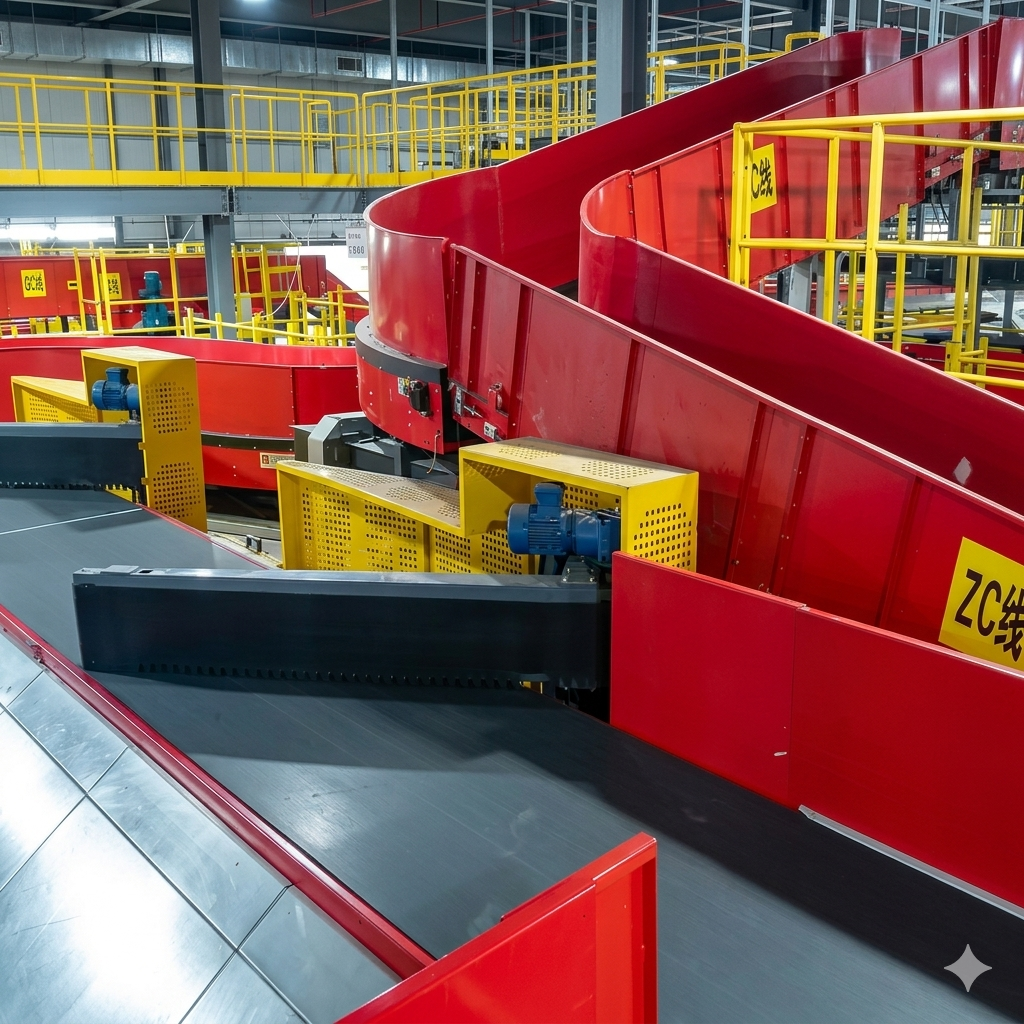
The Swing Arm Sorter (also known as a Pivot Arm Sorter) is built for fast, reliable parcel diverting in demanding warehouse environments. Its heavy-duty steel construction handles parcels up to 60 kg, making it suitable for operations that process heavier items alongside standard parcels.
- Capacity: Up to 2,000 parcels per hour
- Sorting weight: Up to 60 kg per parcel
- Material: Heavy-duty steel construction
- Lane capacity: Multi-lane, customizable
- Best for: Medium to high-throughput operations, industrial and manufacturing logistics
While its throughput is lower than cross-belt or wheel-based sorters, the swing arm sorter compensates with its ability to handle heavier parcels and its robust construction for long service life. It is an excellent choice for operations where parcel weights vary significantly and durability is the top priority.
8. Turntable Wheel Sorter — 360-Degree Routing in Compact Spaces
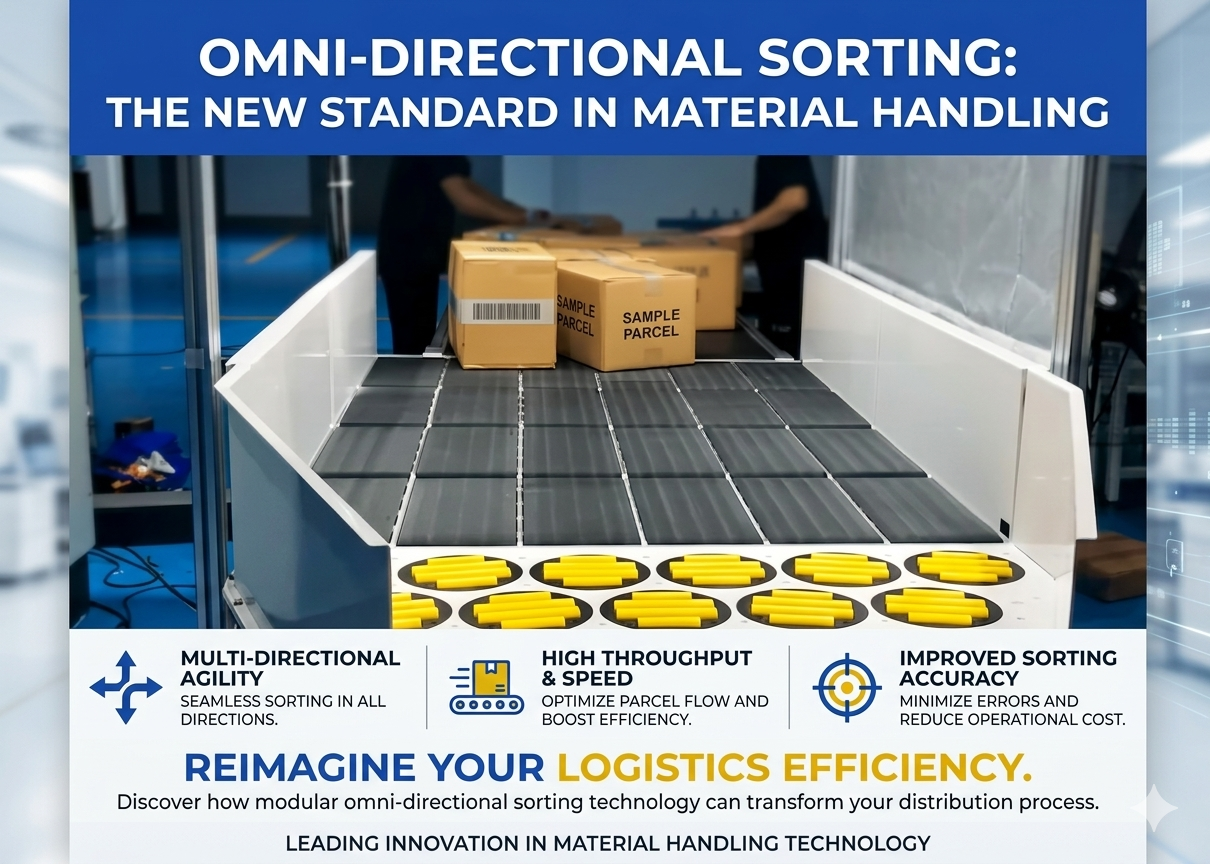
The Turntable Wheel Sorter combines a rotating turntable mechanism with wheel-driven conveying to divert parcels in multiple directions — up to a full 360 degrees. It is the ideal solution for sites where floor space is limited but sorting logic is complex.
- Capacity: 4,000–6,000 items per hour
- Sorting weight: Up to 60 kg per item
- Speed: 45–120 m/min
- Swing angle: ±45 degrees, customizable layouts
- Drive method: Servo drive
- Equipment width: 220–1260 mm or custom
- Best for: E-commerce fulfillment, cross-border logistics, 3PL warehouses, retail and FMCG distribution
The turntable design reduces conveyor length while maintaining reliable parcel flow — a critical advantage in urban distribution centers where real estate is expensive. The servo-driven mechanism ensures precise positioning, and the PLC-based control system integrates seamlessly with WMS, WCS, and DMS platforms.
Comparison: Which Automated Sorting System Is Right for You?
| Sorter Type | Max Capacity | Max Weight | Best Application |
|---|---|---|---|
| Cross-Belt Sorter | 10,000/hr | Lightweight parcels | Large hubs & distribution centers |
| Faster Sorter | Thousands/hr | Small packages | Continuous high-volume operations |
| Modular Belt Sorter | High | Medium parcels | Scalable, growing operations |
| Narrow Belt Sorter | High | Mailers & cartons | Postal & mixed-size parcel flows |
| O-Belt Wheel Sorter | 8,000/hr | 30 kg | Low-noise, multi-angle diverting |
| Pivoting Wheel Sorter | High | Cartons & totes | Retrofit projects, gentle handling |
| Swing Arm Sorter | 2,000/hr | 60 kg | Heavy parcels, durable operation |
| Turntable Wheel Sorter | 6,000/hr | 60 kg | Compact spaces, 360° routing |
Key Factors to Consider When Choosing an Automated Sorter
Beyond the comparison table, several factors influence which sorting system will deliver the best ROI for your facility:
- Parcel profile: Weight, size, shape, and fragility of your typical parcels determine which sorter mechanism is safe and effective.
- Throughput requirements: Calculate your peak-hour sorting volume, not just averages. A sorter that handles 4,000/hr may suffice for average days but create bottlenecks during peak seasons.
- Floor space: Compact sorters like the turntable wheel sorter and narrow belt sorter are designed for facilities where space is constrained.
- Integration needs: If you need barcode scanning, RFID tracking, weight checking, or dimensioning, choose a sorter that supports WMS, WCS, and DMS integration.
- Future scalability: Modular designs (modular belt sorter, faster sorter) allow you to expand capacity without replacing the entire system.
- Maintenance and operating cost: Consider not just the purchase price but ongoing maintenance, energy consumption, and spare parts availability.
Why Choose Guosheng Automated Sorting Systems?
As a leading intelligent logistics equipment manufacturer, Guangdong Guosheng brings engineering expertise across the entire sorting system spectrum. Our automated sorting systems share several core advantages:
- Full product range — eight sorter types covering every parcel profile and throughput requirement
- Custom engineering — every system is configured to match your facility layout, parcel characteristics, and workflow
- System integration — compatible with WMS, WCS, DMS, barcode scanning, RFID, and PLC automation
- Heavy-duty construction — quality materials and manufacturing ensure years of reliable continuous-duty operation
- Global support — installation, training, and after-sales service for distribution centers worldwide
Whether you operate a small e-commerce fulfillment center or a massive cross-border logistics hub, we have a sorting system engineered for your specific needs.
Conclusion
Selecting the right automated sorting system is one of the most impactful decisions a warehouse operator can make. The right sorter increases throughput, reduces labor costs, minimizes sorting errors, and creates a foundation for scalable growth. From the 10,000 parcels-per-hour cross-belt sorter to the space-saving turntable wheel sorter, Guosheng’s eight-model product line covers every sorting scenario.
Ready to upgrade your sorting operation? Contact our engineering team for a customized sorting system proposal, or explore the full automated sorting system product line to compare specifications.
Configuration Questions Before You Buy
When selecting an automated sorter, confirm your parcel size and weight range, peak hourly volume, number of sorting destinations, available footprint, and required WMS/WCS/DMS integration. Beyond the cross-belt models above, Guosheng also offers narrow belt sorters for compact high-density lines, wheel sorters for low-noise multi-angle diverting, and swing arm sorters for heavier parcels — so the final configuration can be matched precisely to your operation.
Frequently Asked Questions
Q: What is an automated sorting system?
A: An automated sorting system is a mechanical and software-driven solution that uses conveyors, diverters, and control systems to route parcels, cartons, and packages to their correct destinations without manual intervention. These systems can process thousands of items per hour with high accuracy and are essential for modern e-commerce, postal, and 3PL logistics operations.
Q: How many parcels per hour can an automated sorter handle?
A: Throughput varies by sorter type. Guosheng’s cross-belt sorter handles up to 10,000 parcels per hour, while O-belt wheel sorters process 4,000–8,000/hr and turntable wheel sorters handle 4,000–6,000/hr. The swing arm sorter, designed for heavier parcels, processes up to 2,000/hr. Custom configurations can be designed for higher capacity requirements.
Q: Which automated sorter is best for heavy parcels?
A: The Swing Arm Sorter and Turntable Wheel Sorter both handle parcels up to 60 kg, making them ideal for operations that process heavy or oversized items. The O-Belt Wheel Sorter handles packages up to 30 kg and is suitable for standard e-commerce parcels.
Q: Can Guosheng sorting systems integrate with existing warehouse management software?
A: Yes. All Guosheng automated sorters support integration with WMS (Warehouse Management Systems), WCS (Warehouse Control Systems), DMS (Dimensioning, Weighing, and Scanning), barcode scanning, RFID tracking, and PLC automation. This allows the sorter to receive real-time routing instructions and feed sorting data back to your central management platform.
Q: How much floor space does an automated sorting system require?
A: Space requirements depend on the sorter type and throughput. Compact designs like the turntable wheel sorter and narrow belt sorter are specifically engineered for space-constrained facilities. The cross-belt sorter offers the highest throughput-to-footprint ratio. Our engineering team can design a custom layout optimized for your available floor space.
Q: What is the difference between a cross-belt sorter and a wheel sorter?
A: A cross-belt sorter uses individual belt carriers mounted on a main conveyor chain to discharge parcels left or right — ideal for high-speed, high-volume sorting of lightweight parcels. A wheel sorter (O-belt, pivoting, or turntable) uses rotating wheel modules to divert parcels at angles — better for heavier items and compact layouts. Cross-belt sorters typically achieve higher throughput, while wheel sorters offer more flexibility in divert angles and parcel weights.