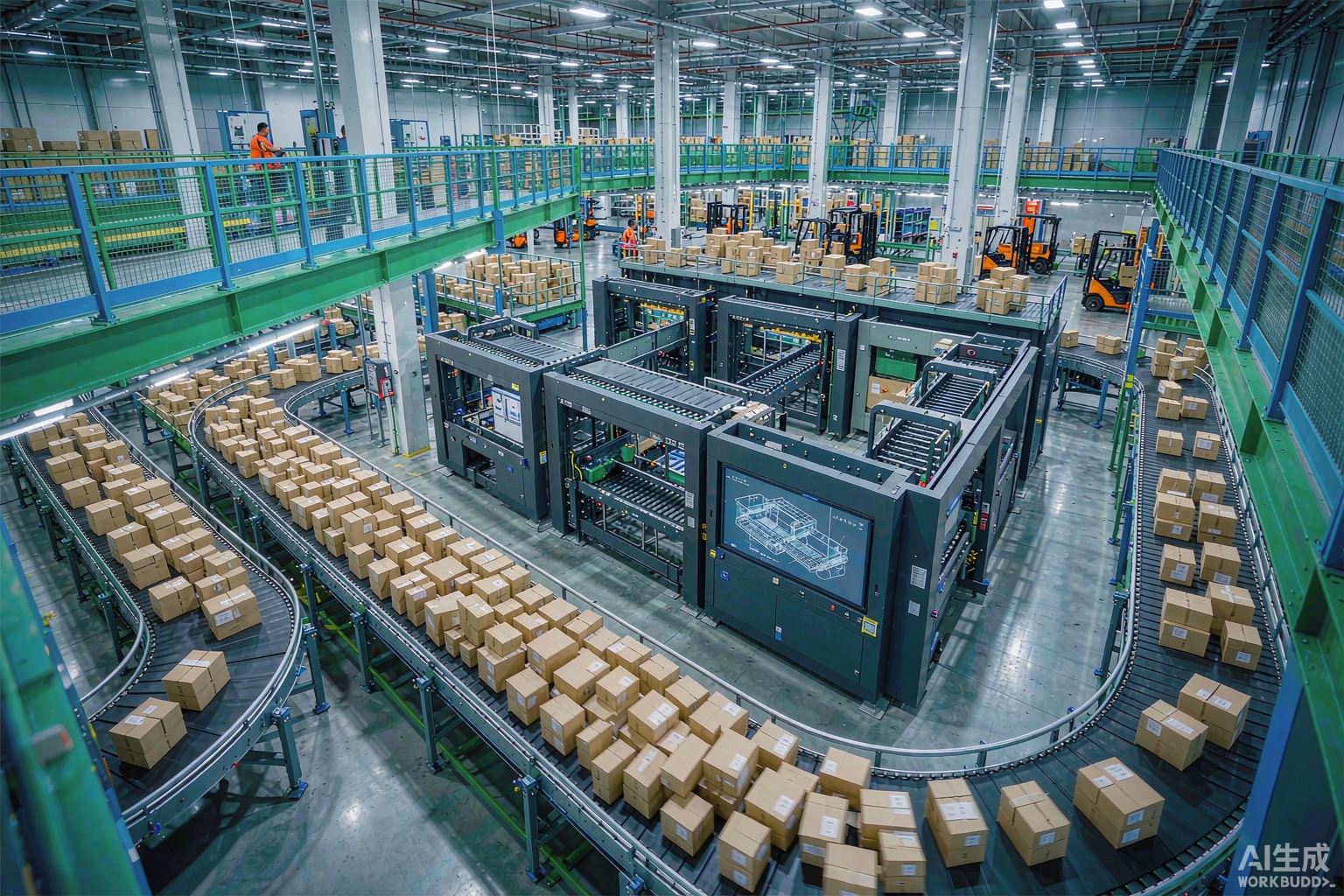
Peak-season pressure, same-day delivery promises, and thousands of small orders per hour make e-commerce fulfillment one of the most demanding material-handling environments in logistics. The difference between a smooth operation and a bottleneck usually comes down to one decision: whether e-commerce fulfillment conveyor systems are matched to how your orders actually flow.
This industry guide walks through each stage of a typical fulfillment center — receiving, putaway, picking and packing, sortation, and outbound — and maps the conveyor and sorting equipment that fits each stage, using Guosheng’s product range as the reference.
Stage 1: Receiving and Putaway
Inbound goods arrive on pallets and in cartons. The first job is moving them from the dock into storage quickly, so truck turnaround does not stall the whole center.
- Telescopic conveyors extend into trucks to unload cartons fast with fewer workers.
- For palletized inbound, a fork-type vertical lift или reciprocating conveyor moves pallets between dock and storage levels.
Stage 2: Transport Between Zones
Between receiving, storage, picking, and packing, cartons and totes must move continuously. This is where the backbone conveyors earn their keep.
- Belt conveyors carry parcels, cartons, and totes with smooth, controlled speed along straight lines.
- Roller conveyors handle flat-bottomed cartons and totes economically, with с питанием or gravity options.
- Curve and spiral belt conveyors route flow around corners and through tight layouts without stopping the line.
Stage 3: Moving Between Floors and Mezzanines
Most fulfillment centers use mezzanines or multiple levels for storage and packing. Vertical movement is the quiet bottleneck that many operations miss.
- Continuous vertical conveyors sustain high-volume flow of cartons and totes between floors.
- Spiral chain conveyors save floor space while moving goods up or down continuously.
- For heavy loads and pallets, vertical conveyors and lifts provide the safe, powered transfer path.
For a detailed comparison of vertical options, see our guides on vertical lift conveyor types и powered spiral conveyor systems.
Stage 4: Parcel Sortation to Orders and Carriers
Sortation is the heart of e-commerce fulfillment — routing each packed order to the right lane, tote, or carrier bay at high speed with few errors.
- Cross-belt sorters handle up to 10,000 parcels per hour for large hubs.
- Wheel, narrow-belt, and swing-arm sorters offer flexible capacity and parcel-weight coverage, from small mailers to 60 kg cartons.
- Спуски drop sorted parcels gently from the sorter deck to packing or dispatch lines below.
Equipment choice depends on your parcel profile and peak volume. For planning help, read our warehouse conveyor system design checklist и automated sorting system cost guide.
Stage 5: Outbound Loading
Sorted orders gather at dispatch, where speed matters again — carrier cut-offs wait for no one.
- Telescopic conveyors extend into outbound trucks to load parcels directly, cutting dock time.
- Takeaway conveyors feed dispatch staging areas in a steady, organized stream.
Designing for Peak Season
E-commerce demand is not steady — it spikes. Design your conveyor network around peak-hour volume, not the daily average:
- Size sortation capacity for the busiest hour of your busiest week.
- Add accumulation zones so upstream surges do not jam downstream equipment.
- Plan modular systems that can expand — belt and sorter lines can be extended as order volumes grow.
Заключение
Every stage of an e-commerce fulfillment center — receiving, transport, vertical flow, sortation, and outbound — has equipment that fits it well. Match conveyors and sorters to your actual order flow, plan for peak season, and the result is fewer bottlenecks, lower labor cost per order, and faster cut-off compliance. Guosheng supplies the full equipment range across all five stages from a single engineering team, so the system is designed as one integrated flow.
Planning a fulfillment automation project? Связаться с Гошэном with your order profile and layout, and our engineers will map the right conveyor and sorting equipment to each stage of your fulfillment flow.
Часто задаваемые вопросы
Q: What conveyor systems does an e-commerce fulfillment center need?
A: A typical center uses belt and roller conveyors for transport between zones, vertical conveyors or spiral conveyors for floor and mezzanine changes, and automated sorters (cross-belt, wheel, or swing-arm) for routing orders to carriers — plus telescopic conveyors at the docks.
Q: How fast can an automated sorter process parcels?
A: Throughput depends on sorter type. Guosheng cross-belt sorters handle up to 10,000 parcels per hour, while wheel and narrow-belt sorters cover 4,000–8,000 per hour and swing-arm sorters handle heavier parcels up to 60 kg at up to 2,000 per hour.
Q: What is the most important factor when designing fulfillment conveyors?
A: Peak-hour volume. If you design for the daily average, your line will bottleneck during surges. Size sortation and transport capacity for the busiest hour of your peak season, and include accumulation buffers between stages.