
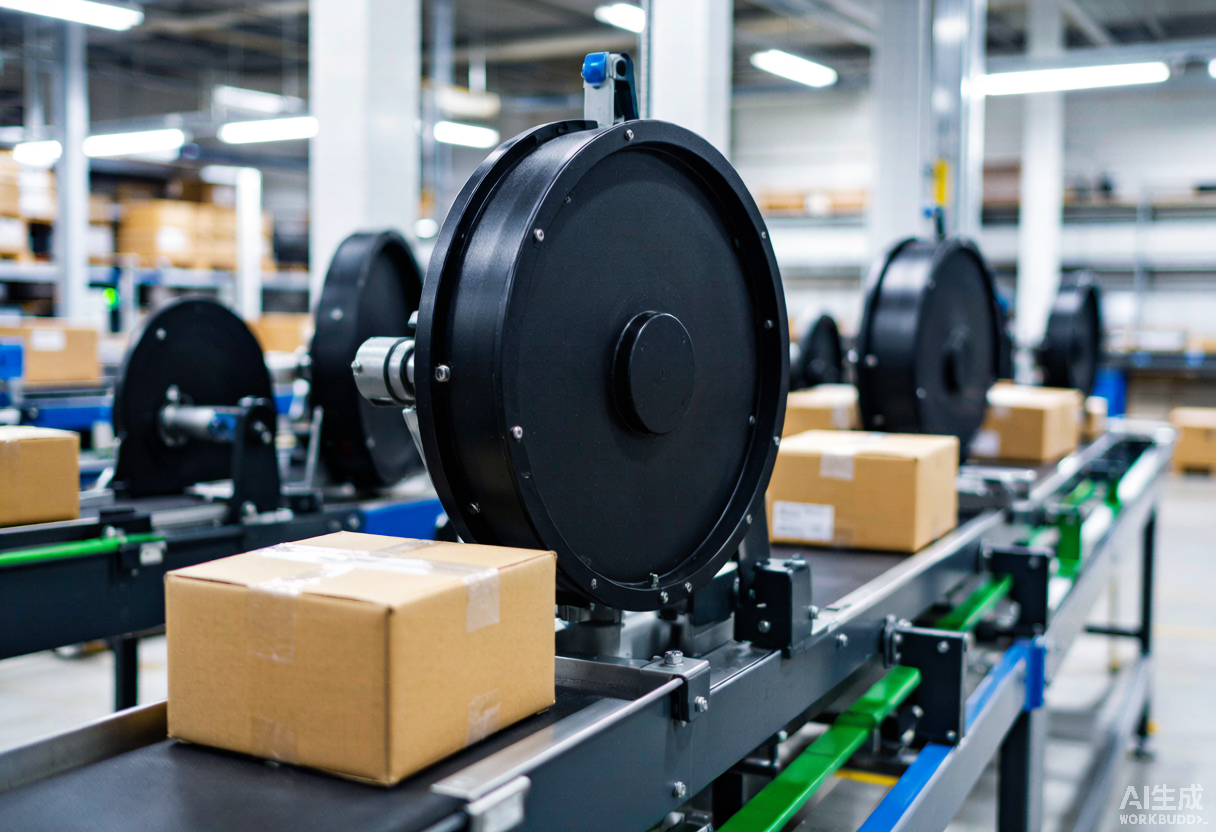
When it comes to automated parcel sorting, two technologies dominate the conversation: the cross-belt sorter e o wheel sorter. Both route parcels to their correct destinations automatically, but they achieve this through fundamentally different mechanisms — and each has strengths that suit different operations.
In this guide, we compare the two head-to-head using Guosheng’s actual products — the Classificador de correias cruzadas and the wheel-based sorters including the Classificador de rodas com correia em O, Classificador de rodas giratório, e Classificador de rodas com plataforma giratória.
Como funciona um classificador de correias cruzadas
A cross-belt sorter uses individual belt carriers mounted on a main conveyor chain. Each carrier belt runs perpendicular to the direction of travel, allowing it to discharge a parcel left or right into a sorting chute or takeaway conveyor without stopping the main line.
- Capacidade: Até 10.000 encomendas por hora
- Ideal para: Encomendas pequenas, médias e leves
- Handling: Gentle — each parcel travels on its own belt
- Integração: WMS, WCS, DMS, barcode, and RFID ready
How a Wheel Sorter Works
A wheel sorter uses rows of rotating wheels (O-belt, pivoting, or turntable configurations) that change direction on demand to divert parcels at angles from 30 to 60 degrees — or up to 360 degrees with a turntable mechanism.
- Capacidade: 4,000–8,000 parcels per hour depending on model
- Peso da embalagem: Up to 30 kg (O-belt) or 60 kg (swing arm / turntable)
- Ângulos de desvio: 30, 45, 60 graus ou personalizado
- Footprint: Compact, space-efficient designs
Cross-Belt vs Wheel Sorter: Key Differences
| Critério | Classificador de correias cruzadas | Wheel Sorter |
|---|---|---|
| Max capacity | 10,000 parcels/hr | 4,000–8,000 parcels/hr |
| Max parcel weight | Encomendas leves | Up to 30–60 kg |
| Divert angle | Left/right discharge | 30–60° or 360° (turntable) |
| Pegada ecológica | Compact for its capacity | Very compact |
| Custo | Mais alto | Lower to mid |
| Ideal para | Extreme throughput hubs | Mid-volume, heavier parcels, tight spaces |
Qual você deve escolher?
Choose a cross-belt sorter if…
- You need maximum throughput — approaching 10,000 parcels per hour
- Your parcels are small to medium and lightweight
- You operate a large distribution hub with many sorting destinations
Choose a wheel sorter if…
- Your parcels are heavier (up to 30–60 kg)
- You have limited floor space and need a compact layout
- You need flexible divert angles and lower capital investment
- You want a low-noise option for noise-sensitive facilities
Conclusão
Both cross-belt and wheel sorters are proven technologies. Cross-belt sorters win on sheer throughput for large e-commerce and parcel hubs, while wheel sorters offer a smarter fit for mid-volume operations, heavier parcels, and space-constrained facilities. Define your parcel profile and peak volume, and the right technology becomes clear.
Need help choosing? Talk to our sorting engineers ou confira a versão completa automated sorting system product line to compare specifications side by side.
Perguntas frequentes
P: Qual é a diferença entre um classificador de correias cruzadas e um classificador de rodas?
A: A cross-belt sorter uses individual belt carriers to discharge parcels left or right at very high speeds (up to 10,000/hr), ideal for lightweight parcels. A wheel sorter uses rotating wheel modules to divert parcels at angles, handling heavier items (up to 60 kg) in a more compact footprint.
Q: Which sorter is faster, cross-belt or wheel?
A: Cross-belt sorters are typically faster in throughput, reaching up to 10,000 parcels per hour, while wheel sorters handle 4,000–8,000 per hour depending on the model and configuration.
Q: Can a wheel sorter handle heavy parcels?
A: Yes. Guosheng wheel sorters handle parcels up to 30 kg (O-belt model), while the swing arm and turntable wheel sorters support up to 60 kg per item — significantly more than a typical cross-belt sorter.