
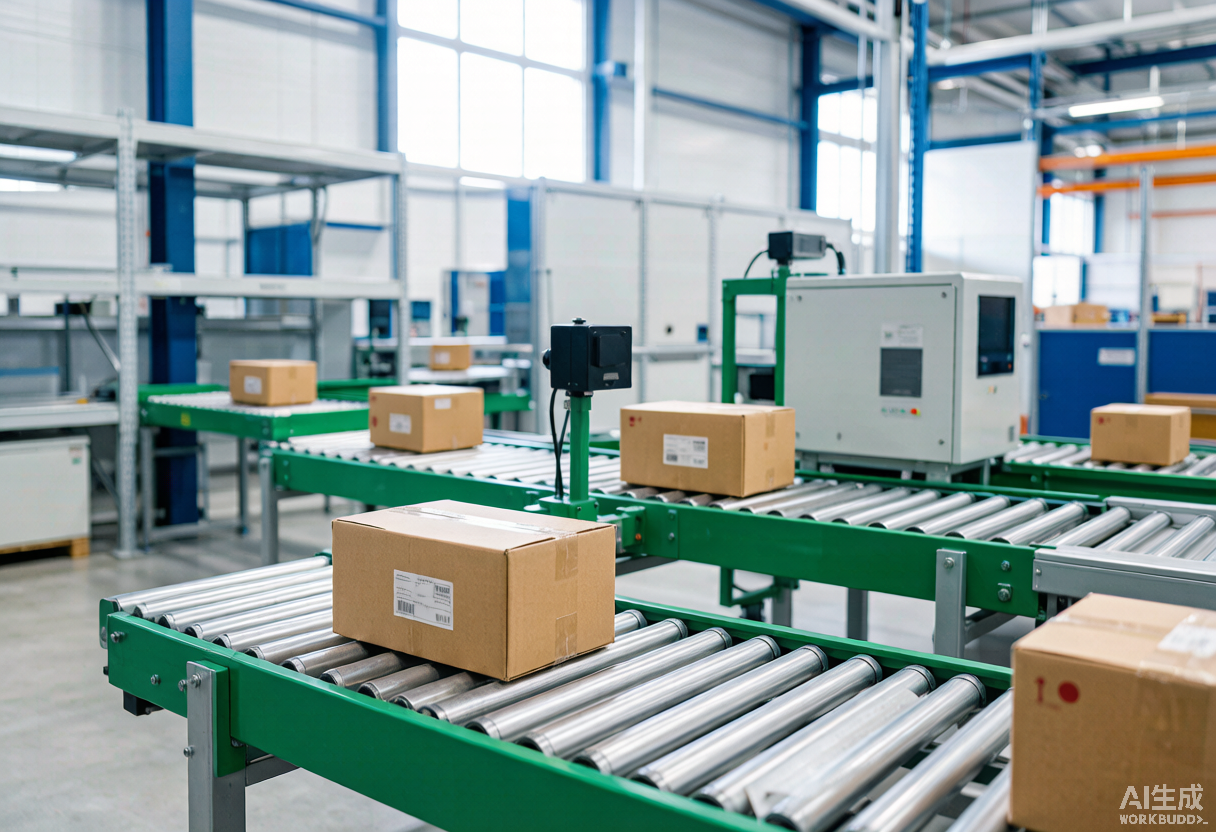
A sistema de transportador de correia é a espinha dorsal da maioria dos armazéns automatizados. Utiliza uma superfície de correia contínua para mover encomendas, caixas de cartão e mercadorias de um ponto para outro — de forma suave, contínua e com controlo preciso de velocidade. Quer esteja a ligar uma estação de embalagem a um separador ou a fazer a ponte entre duas zonas de processo, os transportadores de correia proporcionam o fluxo de materiais fiável de que a logística moderna depende.
A Guangdong Guosheng fabrica uma gama completa de soluções de transportadores de correia para automação de armazéns e logística. Este guia percorre cada tipo e como escolher o mais adequado para a sua operação.
Tipos de Sistemas de Transportador de Correia
1. Transportador de Correia Reto
O Transportador de correia reta é o cavalo de batalha do manuseamento de materiais. Proporciona um fluxo contínuo e controlável ao longo de uma linha reta, com larguras de correia de 300 mm a 1.200 mm e capacidades de carga de 50–200 kg por metro. As velocidades são ajustáveis de 0,1 a 2,0 m/s para corresponder ao seu ciclo de produção.
2. Transportador de Correia Curvo
O Transportador de correia curvo encaminha mercadorias de forma contínua em curvas de 45°, 60°, 90°, 180° ou até configurações espirais de 360°, a velocidades de correia até 550 pés/min. Com raios internos de 150 mm a 1.500 mm, é essencial para layouts compactos e complexos onde as linhas retas não são possíveis.
3. Transportador de Correia Curvo em Espiral
O Transportador de correia em curva espiral combina curva e mudança de elevação numa única unidade que poupa espaço. Suporta cargas totais até 1.600 kg com velocidades de transporte ajustáveis até 60 m/min — perfeito para instalações congestionadas que necessitam de movimento vertical sem uma grande pegada.
4. Transportador de Correia Estreito para Fusão
O Transportador de fusão de correia estreita funde caixas de cartão e encomendas de múltiplas linhas num único fluxo, melhorando a eficiência de alimentação do separador. Suporta cargas de 5–50 kg com velocidade ajustável, utilizando correias de PVC ou PU.
5. Transportador de Correia Telescópico
O Transportador de correia telescópico estende-se diretamente para dentro de camiões ou contentores para carregamento e descarregamento eficientes, suportando 50–100 kg por metro com velocidade ajustável. Reduz drasticamente o transporte manual e o tempo de rotação dos veículos.
6. Transportador Telescópico de Resgate e Incêndio
O Transportador telescópico para bombeiros e resgate é concebido especificamente para resposta a emergências e transporte de materiais perigosos, com correias resistentes ao fogo e construção em aço carbono de serviço pesado.
Como Escolher o Transportador de Correia Adequado
- Defina o seu percurso — layouts retos, curvos ou em espiral determinam o tipo de transportador.
- Conheça as dimensões das suas encomendas — a largura da correia deve acomodar confortavelmente o seu artigo maior.
- Calcule a carga por metro — corresponda a capacidade nominal do transportador às suas caixas mais pesadas.
- Defina a velocidade — alinhe a velocidade de transporte com os equipamentos a montante e a jusante.
- Planeie a integração — assegure a compatibilidade com separadores, scanners e controlos WCS.
Conclusão
Os sistemas de transportador de correia proporcionam o fluxo de materiais contínuo e controlado que os armazéns automatizados exigem. Desde os cavalos de batalha em linha reta até às curvas em espiral que poupam espaço e às unidades telescópicas de carregamento de camiões, a linha de transportadores de correia da Guosheng cobre todas as aplicações. Defina o seu layout e perfil de carga, e os nossos engenheiros configurarão o sistema certo para si.
A conceber uma linha de transporte? Entre em contato com a Guosheng ou explore o catálogo completo gama de produtos de transportadores de correia.
Perguntas frequentes
P: Para que serve um sistema de transportador de correia?
R: Um sistema de transportador de correia transporta encomendas, caixas de cartão e mercadorias continuamente ao longo de uma superfície de correia entre zonas de processo. É utilizado na automação de armazéns para transporte, fusão, curvatura e carregamento de camiões, proporcionando um fluxo de materiais suave e com velocidade controlada.
P: Quanto peso pode suportar um transportador de correia?
R: Os transportadores de correia retos da Guosheng suportam 50–200 kg por metro, os modelos telescópicos suportam 50–100 kg por metro, e os transportadores de correia estreitos para fusão suportam 5–50 kg por artigo. Os transportadores de correia curvo em espiral suportam cargas totais até 1.600 kg.
P: Os transportadores de correia podem fazer curvas?
R: Sim. Os transportadores de correia curvos da Guosheng encaminham mercadorias em configurações de 45°, 60°, 90°, 180° e espirais de 360°, com raios internos de 150 mm a 1.500 mm.