
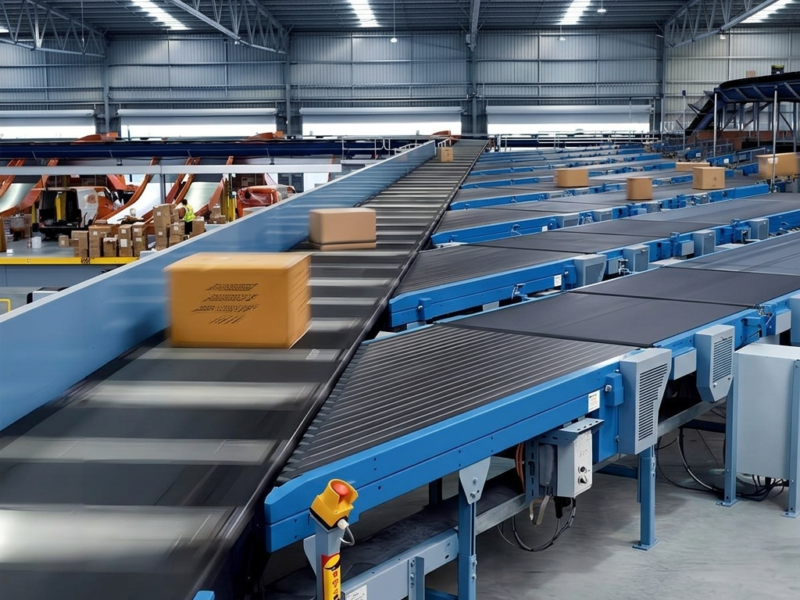
Automated sorting has become a practical requirement for parcel hubs, e-commerce fulfillment centers, cross-border warehouses, and distribution operations that need to move more packages with fewer bottlenecks. The challenge is not simply buying a faster machine. The real decision is choosing the right automated sorting system for your parcel profile, layout, throughput target, and expansion plan.
At Gunshi Technology, automated sorting projects usually start from the same operational questions: What package sizes need to be handled? How many destinations are required? How much floor space is available? How should the sorter connect with upstream and downstream conveyors? The answers determine whether a cross-belt sorter, narrow belt sorter, wheel sorter, swing arm sorter, or modular belt sorter is the best fit.
Why sorter selection matters
A sorting system affects more than one process step. It influences labor efficiency, scanning rhythm, line balance, package safety, maintenance workload, and the ability to add new lanes as order volume grows. A system that is oversized can waste budget and space. A system that is undersized can create congestion, missed dispatch windows, and repeated manual rework.
That is why Gunshi approaches sorting projects as part of a broader intralogistics solution. The company designs and manufactures intelligent sorting systems, conveyors, and support equipment for e-commerce, express, pharmaceutical, airport, warehousing, and 3PL environments, then backs those projects with layout planning, customization, installation guidance, and after-sales support.
Common automated sorting system options
Cross-Belt Sorter
The Cross-Belt Sorter is a strong choice when operations require high throughput, accurate destination handling, and a scalable layout for distribution hubs or large parcel centers. It is well suited to projects where sorting speed and routing precision are the primary priorities, especially in facilities processing diverse parcel flows across many chutes or outlets.
Narrow Belt Sorter
The Narrow Belt Sorter is often selected for mixed parcel handling where accurate transfer and stable flow are essential. It works well in e-commerce, postal, retail, and 3PL environments that need dependable sortation across cartons, parcels, and mailer-type packaging while maintaining a compact, integration-friendly line.
Wheel Sorters
Wheel sorter systems are useful when facilities need flexible diverting across multiple lanes with relatively compact system footprints. Gunshi offers several configurations in this category, including the Pivoting Wheel Sorter, Turntable Wheel Sorter, and O-Belt Wheel Sorter. These solutions are practical for parcel and carton routing where adaptable transfer angles, stable package movement, and efficient lane assignment are important.
Swing Arm Sorter
The Swing Arm Sorter is a good fit for fast and reliable parcel diverting in warehouse and distribution operations. It is commonly used when the line must support multi-lane flows, predictable package transfer, and durable operation under repeated daily loading.
Modular Belt Sorter
The Modular Belt Sorter is a practical option for operations that want a scalable conveyor-driven sorting platform. Its modular architecture supports phased expansion, easier line adaptation, and future throughput growth without requiring a full redesign from the beginning.
Five factors to define before sending an RFQ
1. Parcel profile
Start with the real handling mix: parcel dimensions, weight range, packaging type, bottom stability, and fragile-content ratio. Systems that perform well for cartons may not be ideal for irregular soft parcels, and systems designed for lightweight parcels may need reinforcement for heavier loads.
2. Throughput target
Peak-hour demand matters more than average volume. A sorter should be evaluated against normal operation, seasonal spikes, and near-term growth. Gunshi’s category range includes options for both medium-volume and high-throughput applications, making it easier to align equipment selection with actual demand.
3. Layout and lane configuration
Facility shape, column spacing, infeed positions, discharge points, and available installation footprint directly influence sorter choice. Compact routing projects may benefit from wheel-sorter configurations, while larger hub-style layouts may justify cross-belt or modular belt architecture.
4. Integration with the rest of the line
A sorter should not be chosen in isolation. It must connect smoothly with conveyor lines, scanning stations, buffer areas, chutes, and vertical transport modules. This is one reason Gunshi’s product scope also covers belt conveyors, roller conveyors, vertical conveyors, and chute solutions across the same project environment.
5. Maintenance and long-term serviceability
The best system is not only productive on day one. It should also be practical to maintain. Access for inspection, spare-part logic, modular replacement, and operator familiarity all affect uptime. Gunshi emphasizes serviceability together with performance, which helps customers reduce avoidable downtime over the full equipment lifecycle.
Where automated sorting systems deliver the most value
Automated sorting systems are especially valuable in operations where handling speed and routing accuracy directly affect customer commitments. Typical use cases include e-commerce fulfillment, express and CEP networks, pharmaceutical distribution, airport logistics, cross-border parcel operations, warehousing, and 3PL distribution centers. In each of these sectors, the right sorting method helps stabilize outbound flow and reduce manual touches.
Why work with Gunshi Technology
Gunshi Technology was established in 2019 and focuses on intelligent logistics equipment, customized conveying systems, and practical automation solutions. The company combines product breadth with project customization, covering automated sorting systems, conveyors, chutes, and related intralogistics modules. That wider capability matters because most customers do not need a standalone machine. They need a system matched to site conditions, package flow, and operational targets.
For buyers evaluating a new project, the next step is usually not choosing a single model from a list. It is defining the operating scenario and then matching that scenario to the right equipment path. If you are comparing sorter types or planning a new line, Gunshi can review your layout, throughput target, parcel range, and routing logic, then recommend a more practical system direction.
Next step for your project
If you are planning a parcel handling or warehouse automation upgrade, start by reviewing Gunshi’s Automated Sorting System range and then send your requirements through the contact page. Sharing your layout, parcel size range, target capacity, and preferred routing logic makes it easier to define a solution that is faster to install, easier to maintain, and better aligned with long-term growth.