
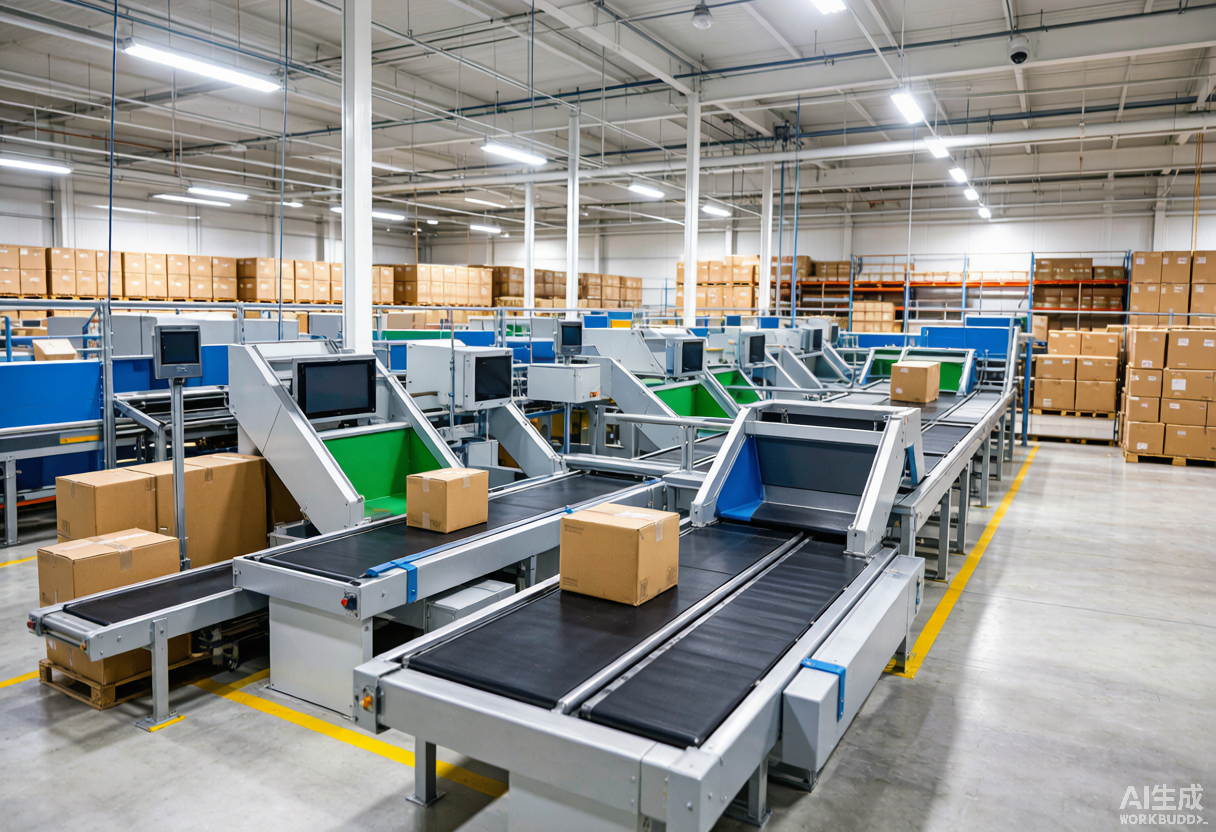
If you are planning a warehouse automation project, automated sorting system cost is probably the first question on your list — and the hardest to answer with a simple number. Prices vary enormously based on sorter type, capacity, configuration, and integration scope.
This guide breaks down what drives parcel sorter pricing in 2026, gives realistic cost ranges by technology, and explains how to calculate the return on investment for a sorting machine in your facility.
What Drives Automated Sorting System Cost?
No two sorting systems are priced identically. The main cost drivers include:
- Sorter technology — cross-belt sorters, wheel sorters, swing arm sorters, and belt sorters have very different mechanical complexity and price points.
- Throughput capacity — a system rated for 10,000 parcels per hour costs significantly more than one rated for 2,000.
- Number of sorting destinations — more chutes, lanes, or takeaway conveyors add cost.
- Integration scope — connecting to WMS, WCS, DMS, barcode scanners, and RFID tracking adds hardware and software costs.
- Personalización — parcel size range, angles, footprint constraints, and material choices all influence the final quote.
- Installation and commissioning — site preparation, installation labor, testing, and staff training.
Cost Ranges by Sorter Technology (2026)
To give you a working reference, here are typical budget ranges for different automated sorting technologies:
| Tipo de clasificador | Typical Capacity | Relative Cost |
|---|---|---|
| Clasificadora de brazo oscilante | Up to 2,000 parcels/hr | $ |
| Wheel Sorter (O-belt / pivoting / turntable) | 4,000–8,000 parcels/hr | $$ |
| Belt Sorter (modular / narrow) | High-volume | $$ |
| Clasificador de cintas cruzadas | Up to 10,000 parcels/hr | $$$ |
As a rule of thumb, the more throughput and destinations you need, the higher the upfront investment — but also the faster the payback through labor savings.
The Real ROI of a Parcel Sorting Machine
An automated sorting system’s true value is measured in payback time. Consider what it replaces: manual sorting labor, error-prone routing, and the bottleneck that caps your order throughput. Automated sorters typically:
- Sort thousands of parcels per hour vs. a few hundred manually
- Reduce sorting errors that drive rework and customer complaints
- Operate 24/7 without fatigue or shift constraints
- Scale with peak-season volume spikes
When you compare the cost of a sorting system against avoided labor, error, and delay costs, most installations achieve payback within 12–24 months.
Why Exact Pricing Requires a Custom Quote
Because every facility is different, manufacturers like Guangdong Guosheng price sorting systems on a project basis. Your final cost depends on the parcel mix you handle, your floor plan, the number of destinations, and how deeply the system integrates with your existing conveyor network and warehouse software.
The best way to get an accurate number is to provide your parcel profile, peak hourly volume, and facility layout to an engineering team that can design a system around your needs — rather than trying to fit a one-size-fits-all machine.
Conclusión
Automated sorting system cost ranges widely, but the investment consistently pays off through labor savings, higher throughput, and fewer errors. Define your requirements clearly, compare technologies on total cost of ownership, and request a custom quotation from a manufacturer with experience across sorter types.
Ready to get a precise quote? Contact the Guosheng engineering team with your parcel profile and facility details for a tailored automated sorting system proposal.
Preguntas frecuentes
Q: How much does an automated sorting system cost in 2026?
A: Automated sorting system prices depend on technology, capacity, and integration scope. Swing arm sorters are the most economical, while cross-belt sorters with 10,000 parcels/hour capacity represent the premium tier. Most vendors provide project-based quotations rather than list prices.
Q: Which sorter type has the lowest upfront cost?
A: Swing arm sorters typically have the lowest capital cost, handling up to 2,000 parcels per hour. Wheel sorters and belt sorters sit in the mid-range, with cross-belt sorters at the top end of the price spectrum.
Q: How long does a sorting system take to pay for itself?
A: Most automated parcel sorting systems achieve payback within 12–24 months through labor savings, reduced errors, and increased throughput capacity, depending on volume and labor costs.