
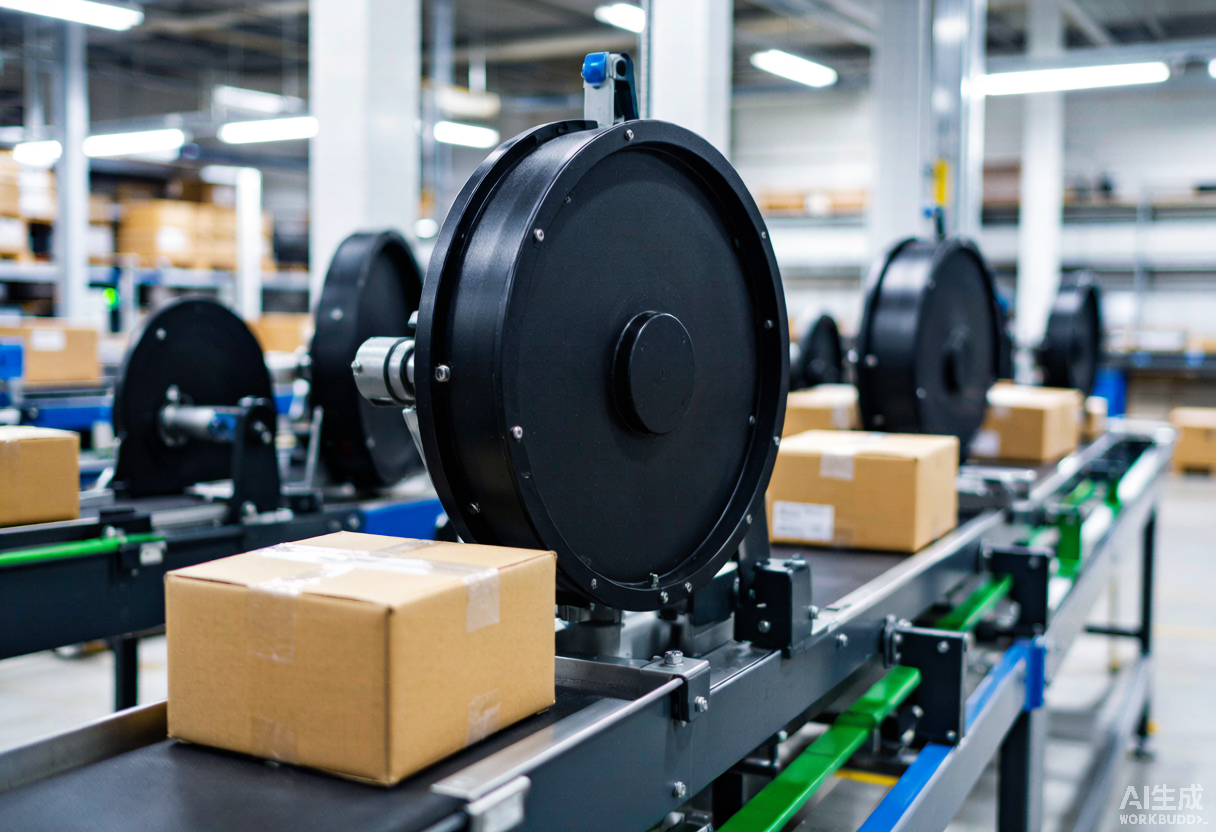
Cuando se trata de clasificación automatizada de paquetes, dos tecnologías dominan la conversación: el clasificador de banda transversal y el clasificador de ruedas. Ambos dirigen los paquetes a sus destinos correctos automáticamente, pero lo logran mediante mecanismos fundamentalmente diferentes — y cada uno tiene fortalezas que se adaptan a diferentes operaciones.
En esta guía, comparamos los dos frente a frente utilizando los productos reales de Guosheng — el Clasificador de cintas cruzadas y los clasificadores basados en ruedas, incluyendo el Clasificador de ruedas con cinta en O, Clasificador de ruedas giratorio, y Clasificador de ruedas con plataforma giratoria.
Cómo funciona una clasificadora de cintas cruzadas
Un clasificador de banda transversal utiliza transportadores de banda individuales montados sobre una cadena transportadora principal. Cada banda transportadora corre perpendicular a la dirección de desplazamiento, lo que le permite descargar un paquete hacia la izquierda o derecha en una tolva de clasificación o transportador de salida sin detener la línea principal.
- Capacidad: Hasta 10 000 paquetes por hora
- Ideal para: Paquetes pequeños, medianos y ligeros
- Manipulación: Suave — cada paquete viaja sobre su propia banda
- Integración: Compatible con WMS, WCS, DMS, código de barras y RFID
Cómo funciona un clasificador de ruedas
Un clasificador de ruedas utiliza filas de ruedas giratorias (configuraciones de correa en O, pivotantes o de plato giratorio) que cambian de dirección a demanda para desviar paquetes en ángulos de 30 a 60 grados — o hasta 360 grados con un mecanismo de plato giratorio.
- Capacidad: 4.000–8.000 paquetes por hora según el modelo
- Peso del paquete: Hasta 30 kg (correa en O) o 60 kg (brazo oscilante / plato giratorio)
- Ángulos de desviación: 30, 45, 60 grados o a medida
- Huella: Diseños compactos y eficientes en espacio
Banda transversal vs clasificador de ruedas: diferencias clave
| Criterio | Clasificador de cintas cruzadas | Clasificadora de ruedas |
|---|---|---|
| Capacidad máxima | 10.000 paquetes/h | 4.000–8.000 paquetes/h |
| Peso máximo del paquete | Paquetes ligeros | Hasta 30–60 kg |
| Ángulo de desvío | Descarga izquierda/derecha | 30–60° o 360° (plato giratorio) |
| Huella | Compacto para su capacidad | Muy compacto |
| Coste | Más alto | De bajo a medio |
| Ideal para | Centros de rendimiento extremo | Volumen medio, paquetes más pesados, espacios reducidos |
¿Cuál deberías elegir?
Elija un clasificador de banda transversal si…
- Necesita el máximo rendimiento — acercándose a 10.000 paquetes por hora
- Sus paquetes son de pequeños a medianos y ligeros
- Opera un gran centro de distribución con muchos destinos de clasificación
Elija un clasificador de ruedas si…
- Sus paquetes son más pesados (hasta 30–60 kg)
- Tiene espacio de piso limitado y necesita una configuración compacta
- Necesita ángulos de desvío flexibles y una inversión de capital menor
- Desea una opción de bajo ruido para instalaciones sensibles al ruido
Conclusión
Tanto los clasificadores de banda transversal como los de ruedas son tecnologías probadas. Los clasificadores de banda transversal ganan en rendimiento puro para grandes centros de comercio electrónico y paquetería, mientras que los clasificadores de ruedas ofrecen un ajuste más inteligente para operaciones de volumen medio, paquetes más pesados e instalaciones con espacio limitado. Defina el perfil de sus paquetes y el volumen máximo, y la tecnología adecuada se vuelve clara.
¿Necesita ayuda para elegir? Hable con nuestros ingenieros de clasificación o echa un vistazo a la versión completa productos de sistemas de clasificación automatizada para comparar especificaciones lado a lado.
Preguntas que debe hacer antes de elegir
Confirme cuatro cosas antes de decidir: su máximo de paquetes por hora, el paquete más pesado, la huella disponible y sus requisitos de ángulo de desvío. Si sus paquetes son pesados o su espacio es reducido, también compare el clasificadora de brazo oscilante (hasta 60 kg) y el compacto clasificador de cinta estrecha — ambos completan la línea de clasificadores junto con las tecnologías de ruedas y banda transversal cubiertas aquí.
Preguntas frecuentes
P: ¿Cuál es la diferencia entre un clasificador de cintas cruzadas y un clasificador de ruedas?
R: Un clasificador de banda transversal utiliza transportadores de banda individuales para descargar paquetes hacia la izquierda o derecha a velocidades muy altas (hasta 10.000/hora), ideal para paquetes ligeros. Un clasificador de ruedas utiliza módulos de ruedas giratorias para desviar paquetes en ángulos, manejando artículos más pesados (hasta 60 kg) en una huella más compacta.
P: ¿Qué clasificador es más rápido, el de banda transversal o el de ruedas?
R: Los clasificadores de banda transversal son típicamente más rápidos en rendimiento, alcanzando hasta 10.000 paquetes por hora, mientras que los clasificadores de ruedas manejan 4.000–8.000 por hora según el modelo y la configuración.
P: ¿Puede un clasificador de ruedas manejar paquetes pesados?
R: Sí. Los clasificadores de ruedas de Guosheng manejan paquetes de hasta 30 kg (modelo de correa en O), mientras que los clasificadores de ruedas de brazo oscilante y plato giratorio soportan hasta 60 kg por artículo — significativamente más que un clasificador de banda transversal típico.